
PART 1: Military History
The South of France as a Second Front
By the summer of 1944, the Allied problem in France was not that the war was going badly. It was going well. Normandy had held, Cherbourg had fallen, and the breakout after Cobra had American and British armies pouring east across the country. The problem was logistics. The Channel ports were either destroyed, still German-held, or too small. Every ton of fuel, ammunition, and food coming ashore was coming over the beaches or through Cherbourg, and Cherbourg alone could not keep pace with what a couple of field armies actually burn in a week of offensive operations. What Eisenhower’s staff needed, urgently, was a working deep-water port on the French coast that was not already choked.
Marseille and Toulon were sitting on the Mediterranean, both capable of handling oceangoing traffic, both in German hands. Taking them was not a new idea. A southern French landing had been on Allied planning tables since 1943 under the codename Anvil, paired with Overlord as the second blade of a pincer on occupied France. George Marshall wanted it. Roosevelt wanted it. Stalin, at Tehran, was unambiguous that he wanted it, because anything that kept German divisions tied down in the west was good for his armies in the east. The one senior figure who did not want it was Winston Churchill, who thought the right second front was in the Balkans and who fought the operation through the spring and summer of 1944 with the stubbornness he usually reserved for things he felt in his bones.
Churchill lost. Roosevelt overrode him, the codename was changed to Dragoon (Churchill himself claimed later that he had named it that because he felt “dragooned” into it, a story I would love to believe, though the evidence for it is thin), and the landings were set for August 15, 1944. The target beaches ran along the stretch of coast between Cavalaire-sur-Mer and Saint-Raphaël, on the eastern edge of Provence. Behind those beaches, past the first ridgelines, were the vineyards of the Côtes de Provence, the road up the Rhône Valley, and, eventually, the southern flank of the German army.
The Plan and the Forces
The assault force that went ashore on August 15 was the U.S. Seventh Army under Lieutenant General Alexander Patch, a steady, unflashy commander who had taken over the island fighting on Guadalcanal in 1943 and who knew how to run a multi-division operation from the first wave inland. His assault echelon was VI Corps under Major General Lucian Truscott, built around three divisions that had earned their experience the hard way: the 3rd Infantry Division, the 36th Infantry Division, and the 45th Infantry Division, all veterans of North Africa, Sicily, and Italy. Behind VI Corps came Armée B under General Jean de Lattre de Tassigny, which would pass through the beachhead and take over the French half of the campaign. Armée B was a French army in name and command but heavily North African in composition, with Algerian, Moroccan, and Tunisian formations making up a large share of the rifle strength. These were the men who would end up doing most of the hard fighting in Toulon and Marseille.
Naval support ran under Vice Admiral H. Kent Hewitt, who had already managed the landings in North Africa, Sicily, and Salerno and who in this case had battleships, cruisers, destroyers, and a group of British escort carriers operating off the coast. Air cover ran to roughly 3,000 aircraft from U.S. and British commands based in Corsica, Sardinia, and Italy. It was, by the standards of the Mediterranean theater, an overwhelming force.
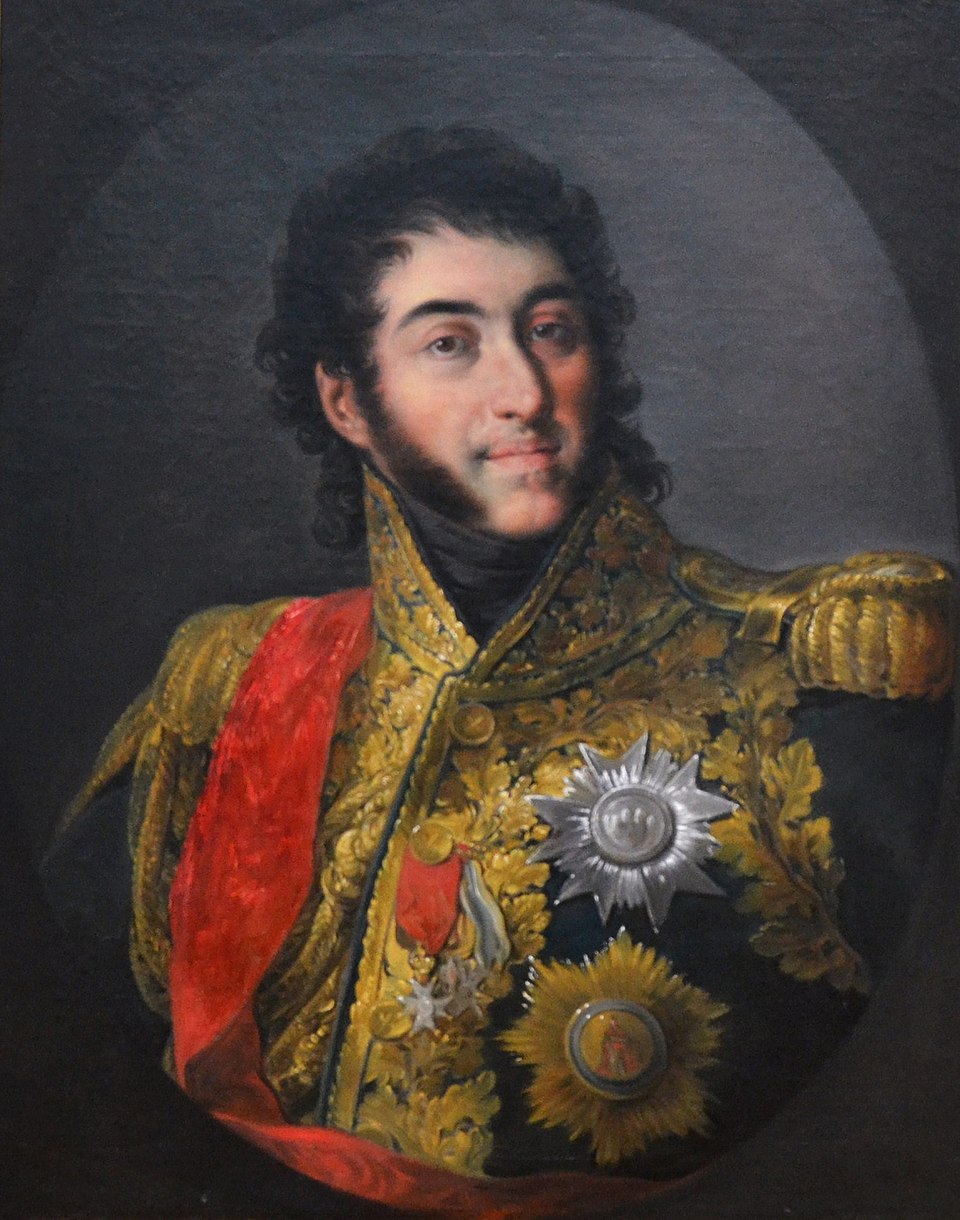
The Germans did not have an equivalent to put against it. Army Group G under Generaloberst Johannes Blaskowitz held southern France on paper, but Blaskowitz’s best divisions had already been pulled north to help stabilize the Normandy front. What he had left was the 19th Army under General Friedrich Wiese, a mixed bag of infantry divisions, coastal defense units, and so-called Ostlegionen (units drawn from former Soviet POWs), stretched thin along a coastline they could not realistically defend. The only real mobile reserve in the theater was the 11th Panzer Division, and it was west of the Rhône when the landings began, which meant the river was between it and the beaches on the morning of the assault. The French Resistance (organized under the Forces Françaises de l’Intérieur, or FFI) had spent the summer cutting rail lines, ambushing convoys, and feeding intelligence to the Allies. By August they were not a nuisance. They were a problem the 19th Army could not solve.
August 15: The Landings


Landings (L) and Invasion fleet (R)
The first Allied boots on French soil south of the Loire that morning were not on the beaches. They were in the air, dropped inland by the 1st Airborne Task Force, a mixed Anglo-American parachute and glider formation under Major General Robert Frederick. Frederick’s troops came down around Le Muy, about ten miles inland, with the job of blocking German reinforcements from reaching the coast and seizing the crossroads the Germans would need to counterattack through. Fog scattered some of the drop, but by midday Le Muy was in Allied hands.
Along the coast, Allied commandos hit the offshore islands of Port-Cros and Île du Levant overnight to silence German batteries there. By dawn, the main amphibious assault was rolling ashore across three main beaches, each assigned to one of Truscott’s divisions.
Alpha Force, the 3rd Division’s sector, landed around Cavalaire-sur-Mer and the Baie de Pampelonne near Saint-Tropez. The beaches had been heavily prepared by naval gunfire and air attack, and the landings went in against light resistance. Delta Force, the 45th Division’s sector, came ashore at Sainte-Maxime and met a similarly thin defense. Camel Force, the 36th Division’s sector, ran into the day’s only serious fight at Saint-Raphaël, where rocky terrain, mines, and well-sited German guns in the bluffs above the beach forced a last-minute change to the plan. The primary landing beach at Camel Red was called off, and the 36th’s assault waves were diverted to secondary beaches to the east. By nightfall the sector was in hand anyway.
By the end of the day, VI Corps had roughly 94,000 men ashore at a cost of fewer than 400 American dead. It was the cleanest large amphibious landing of the European war.


Paratroopers from the 1st Airborne Task Force dropping while Allied naval landings attacked from the coast (L) and 509th Parachute Infantry Battalion (R)
Toulon, Marseille, and the Rhône Corridor
From the beaches, two things happened at once. Truscott drove VI Corps north and then northwest to catch the 19th Army before it could reach the Rhône and turn the retreat into a defense. De Lattre’s Armée B pushed west, along the coast, to take Toulon and Marseille.
The fight for Toulon began on August 20. The city was the French Navy’s main Mediterranean base and the Germans had fortified it heavily, with coastal batteries, strongpoints in the surrounding hills, and scuttled hulks blocking the harbor entrance. De Lattre committed most of his corps to it. The fighting ran for more than a week, mostly uphill and mostly in prepared positions, and by August 28 the garrison surrendered. Marseille fell the same day to a combined effort of French regulars, FFI fighters who had risen inside the city ahead of the Army’s arrival, and colonial infantry working through the streets. Both cities had been scheduled to fall about a month later. The combined German prisoner count across the two operations ran to roughly 37,000 men.
The ports mattered more than the cities. Marseille had been thoroughly demolished on the way out, with cranes dropped into berths and the outer roads mined, but American engineers began clearing it almost before the last German sniper had been rooted out of the old port. By October, Marseille and the smaller Mediterranean ports opened by Dragoon were handling about a third of all Allied cargo tonnage in France. That was the strategic point of the operation, and it arrived on schedule.
While de Lattre was taking the ports, Truscott was trying to close a trap. The 19th Army was withdrawing up the Rhône corridor, and Truscott saw a chance to cut it off near Montélimar, where the valley narrows and the road and rail routes north are pinched between the river and the hills to the east. He pushed Task Force Butler (a fast-moving armored force under Brigadier General Fred Butler) and then the 36th Division into the high ground above Montélimar between August 21 and 28. What followed has been called the Battle of Montélimar, though it was less one battle than a week of confused, overlapping actions fought in broken terrain, in the vineyards and orchards above the river, with American units running short of fuel, artillery ammunition, and in some cases rations. The 11th Panzer Division, now east of the Rhône and covering the retreat, fought hard to keep the road open. The Americans inflicted very heavy losses on the German columns that tried to push through (one estimate credits a single artillery battalion with the destruction of 4,000 vehicles over the course of the week), but the 19th Army’s main body got past. The trap closed late.
Still, by early September the campaign had done what it set out to do. Lyon fell on September 3, liberated partly by Allied armor and partly by the FFI rising inside the city. On September 11 and 12, advance elements of Patch’s Seventh Army made contact with Patton’s Third Army patrols near Sombernon, west of Dijon. The two Allied fronts, the one that had come from the Channel and the one that had come from the Mediterranean, were now a single continuous line running from Switzerland to the sea.
The Dragoon campaign had taken four weeks. American casualties for the whole operation ran to roughly 17,000, a number that looks low against the geography crossed and the forces engaged. The 19th Army, by contrast, had lost an estimated 130,000 men between killed, wounded, and captured, including nearly everything it could not move.
What Dragoon Was and Was Not
Churchill never forgave the decision to land in Provence instead of the Balkans, and the argument has never entirely gone away. There is a respectable case that Dragoon did not shorten the war by very much and that the divisions committed to it could have been used elsewhere. There is also a case, and I find it the better one, that the ports alone justified the operation and that the Rhône pursuit stripped the Germans of an intact army group on the Allied southern flank at a moment when that flank was otherwise wide open.
What is not arguable is the local story. For the towns and villages of Provence, and for the Rhône Valley north of them, Dragoon was the end of four years of occupation. The 1944 grape harvest was picked in late August and September, which was the exact window the armies were moving through the vineyards. Accounts from producers in the Côtes de Provence and the southern Rhône describe that harvest as the first one in years brought in without Germans on the roads. Whether it was a great vintage is a different question, but it was a harvest of their own, for the first time since 1940.
PART 2: Wine Regions
France’s Classification System

French wine sits under a classification framework run by the Institut National de l’Origine et de la Qualité (INAO), the state body that defines and polices appellations. The top tier is the Appellation d’Origine Contrôlée (AOC), which is now also recognized at the European level as an Appellation d’Origine Protégée (AOP). An AOC defines a wine not just by grape variety but by what the French call terroir: a specific geographic area with defined boundaries, permitted grape varieties, yield limits, viticultural practices, and minimum aging requirements. Below the AOC sits the Indication Géographique Protégée (IGP), formerly called Vin de Pays, which covers larger zones and allows more flexibility. Below that is Vin de France, which corresponds to basic table wine without a defined geographic origin.
AOCs are often hierarchical. A regional appellation like Côtes du Rhône covers a wide area; within it, more specific village-level and cru appellations exist (Côtes du Rhône Villages, and above that named crus like Gigondas, Vacqueyras, or Châteauneuf-du-Pape) with stricter rules and, in most cases, better fruit. The system is more than a century old in its core form, first codified in 1935, and it is the template most other European national wine classifications are built on.
The Dragoon campaign, from its beaches to its northern limit, ran across roughly half a dozen AOC regions in southern France. These are, in broad groupings, the coastal and inland appellations of Provence, the southern Rhône, and the eastern edge of the Languedoc.
Côtes de Provence: Where the Landings Happened
Terrain and Soil
Côtes de Provence AOC is the big coastal appellation of Provence, running roughly from Marseille east past Saint-Tropez toward the Italian border, and inland across a patchwork of limestone hills, granitic massifs, and clay-limestone plains. The defining physical features are the Massif des Maures (an old schist and granite range that runs behind the Dragoon landing beaches), the limestone ridges of the Sainte-Baume and the Sainte-Victoire further inland, and the stretch of coastline itself, which brings maritime air and a long, dry growing season. Mistral winds out of the north moderate summer heat and keep disease pressure low.
The 36th Division went ashore in the Bay of Saint-Raphaël, and the 3rd Division came up the beaches at Pampelonne and Cavalaire. Both sectors are in the heart of Côtes de Provence. The vineyards begin, in a literal sense, a few ridgelines back from the surf.
Grapes Grown
- Whites: Rolle (the local name for Vermentino), Clairette, Ugni Blanc, Sémillon, and small plantings of Bourboulenc.
- Reds (also the rosé base): Grenache, Syrah, Cinsault, Mourvèdre, Tibouren, Carignan, and Cabernet Sauvignon (the latter permitted but capped in blends).
Wines Produced
Côtes de Provence is, commercially, a rosé region. Dry, pale, Mediterranean rosé made principally from Grenache, Cinsault, and Syrah accounts for the overwhelming majority of production, and it is the style that has made Provence a global brand over the last twenty-five years. Reds exist, often good, and whites exist, often underrated, but the rosé is the main event. Adjacent to Côtes de Provence, two smaller appellations carry most of the region’s red-wine reputation: Bandol AOC, on the coast west of Toulon, produces dense, age-worthy Mourvèdre-dominated reds from terraced vineyards above the sea; Cassis AOC, even closer to Marseille, is known mainly for its whites.
Slightly inland sit the Coteaux d’Aix-en-Provence AOC and Coteaux Varois en Provence AOC, both producing a similar mix of rosé, red, and white on cooler, higher-elevation sites.
Historical Roots
Viticulture in Provence is the oldest in France. The Greeks of Massalia (modern Marseille), founded by Phocaean colonists from Asia Minor around 600 BCE, brought vines and winemaking to the Gallic coast. The Romans expanded it, using the same valleys that would later define the appellations and cutting the Via Aurelia along the coast to link Italy to Spain. Monastic orders carried the tradition through the medieval period, and by the twentieth century the rural economy of the Var and the Bouches-du-Rhône was still organized around the vine as much as around anything else. When the 36th Division was working its way out of the Camel beaches, it was moving through land that had been producing wine for roughly 2,500 years without a serious interruption. The 1944 harvest, picked inside weeks of the fighting, was a continuation of something very old.
Southern Rhône: The Corridor North
Terrain and Soil
The southern Rhône begins, for wine purposes, roughly at Montélimar (the town around which the trap on the 19th Army was built and half-closed) and runs south to the Mediterranean flats. The valley itself is a broad corridor cut by the river, hemmed in by the Massif Central to the west and the Alpine foothills to the east. Soils vary: famously, the stony galets roulés of Châteauneuf-du-Pape (large rounded quartzite stones deposited by the ancient Rhône) absorb daytime heat and radiate it back through the night; elsewhere, sand, clay, and limestone dominate. The Mistral tears down the valley from the north for much of the year, drying the vines and concentrating the fruit.
This is the ground American armor rolled through for two weeks between Montélimar and Lyon. Any American soldier who kept his eyes open on the move north would have been looking at Côtes du Rhône vineyards, whether or not he knew what they were.
Grapes Grown
- Whites: Grenache Blanc, Clairette, Bourboulenc, Roussanne, Marsanne, Viognier (which is the sole grape of Condrieu and Château-Grillet in the northern Rhône, and plays a supporting role in some southern whites).
- Reds: Grenache is the backbone, supported by Syrah, Mourvèdre, Cinsault, Carignan, Counoise, and a long list of permitted minor varieties, especially at Châteauneuf, which allows thirteen.
Wines Produced
Côtes du Rhône AOC is the regional appellation, covering a wide area and producing generous, approachable, Grenache-led red blends as the core style, with rosé and white playing smaller roles. Côtes du Rhône Villages sits above the regional tier and covers named communes with stricter rules. Above that sit the named crus, almost all in the southern Rhône: Châteauneuf-du-Pape (the prestige address, built on Grenache), Gigondas, Vacqueyras, Rasteau, Cairanne, Lirac, and Tavel (the last famous specifically for rosé). The hillside appellations of Ventoux AOC and Luberon AOC sit just east of the main valley on higher, cooler sites, producing fresher reds and more aromatic whites than the core corridor. At the far northern end of the Dragoon advance, north of Lyon, the northern Rhône (Côte-Rôtie, Condrieu, Hermitage, Crozes-Hermitage, Saint-Joseph, Cornas) is a different country in grape and style, built around single-varietal Syrah and Viognier on very steep granite slopes.
Historical Roots
The Greeks reached the mouth of the Rhône at Massalia first, as noted above, but it was Roman expansion up the river in the first century BCE that turned the Rhône corridor into a serious viticultural zone. The Via Agrippa ran along the valley. Medieval monasteries, and then the Avignon papacy of the fourteenth century, which built the papal summer estate at what became Châteauneuf-du-Pape, shaped the modern geography of the region. The Côtes du Rhône name itself dates to the 1930s, when the AOC system was codified, but the vineyards behind that name are very old.
Eastern Languedoc: The Western Edge of the Campaign
Terrain and Soil
The western edge of the Dragoon advance, especially along the secondary axis through Provence into the lower Rhône delta, brushed the eastern Languedoc. The relevant appellation here is Costières de Nîmes AOC, which sits on a stony plateau between the Rhône and Nîmes, with soils dominated by large rounded pebbles not unlike Châteauneuf’s. Further west, the broader Languedoc AOC covers a vast sweep of garrigue-covered limestone slopes, clay-limestone ridges, and coastal plains all the way to the Spanish border. Maritime air and sun-dominated climate define the whole zone.
Grapes Grown
- Whites: Grenache Blanc, Roussanne, Marsanne, Vermentino, Viognier.
- Reds: Grenache, Syrah, Mourvèdre, Carignan, Cinsault.
Wines Produced
Costières de Nîmes makes mostly reds in a southern-Rhône style, with some rosé and white. The broader Languedoc AOC covers everything from ambitious single-vineyard reds out of Pic Saint-Loup and La Clape down to simple village reds and rosés. In both cases the grape profile is essentially the same Mediterranean Grenache-Syrah-Mourvèdre-Carignan family that defines the southern Rhône and Provence.
Historical Roots
The Languedoc was for most of the nineteenth and twentieth centuries France’s volume region, the “wine lake” that supplied cheap reds to the country and its colonies. The modern story is a qualitative rebuild, with producers working to move the region’s reputation away from bulk production and toward terroir-driven wines of real ambition. By the time of Dragoon, the Languedoc was not a prestige region. It was a working agricultural economy, feeding its grapes into cooperative cellars, and its contact with the Dragoon campaign was incidental rather than central. But it sat, as it still sits, on the western margin of the ground the armies crossed.
PART 3: Weapon Spotlight: The M4 Sherman in Provence
The Sherman

The tank that went up the beach at Saint-Raphaël on August 15 and up the Rhône corridor for the next four weeks was the M4 Sherman, the workhorse medium tank of the U.S. Army and of nearly every American ally by 1944. The Sherman was a product of the Ordnance Department’s standardization effort of 1940 and 1941, meant to replace the stopgap M3 Lee/Grant with a tank that kept the M3’s reliable engine and drivetrain but mounted its main gun in a fully-traversing turret on top of the hull, the way everyone else in the world had already been building medium tanks for a decade. The M3 was a compromise, fielded because the Americans needed something in production quickly; the M4 was the design they had actually wanted. First deliveries went to the British in 1942 and into combat at Second Alamein that October. By 1944, the Sherman was the standard American medium tank, produced in multiple factories and in multiple variants, on a scale no other tank in the war came close to: roughly 49,000 built across all versions.
At Dragoon, Shermans landed in the assault echelon with the 3rd, 36th, and 45th Divisions. The terrain they had to work across was not great tank country in the classical sense. The coastal massifs behind the beaches are steep and broken, and the Rhône corridor itself narrows in places to a ribbon of road between the river and the hills. What the Sherman was good at, and what it did for four weeks straight, was moving fast on a road, with enough reliability to keep the force knit together and enough of them around that losses could be replaced without slowing the advance. Task Force Butler, Truscott’s improvised armored force at Montélimar, was built around a Sherman-equipped tank battalion and ran a few hundred miles in under a week on a handful of hours of maintenance.
The Sherman was a 33-ton vehicle with a five-man crew, a 75 mm M3 main gun (by 1944, the 76 mm M1 was also in service on upgraded variants), secondary .30 caliber Browning machine guns in the bow and coaxial positions, and a .50 caliber M2 Browning on the turret roof for anti-aircraft and anti-personnel work. Hull armor was roughly 51 mm at 56 degrees on the front glacis, giving an effective thickness well above the raw figure, and turret front armor ran roughly 76 mm. Maximum road speed was about 24 to 30 mph depending on engine variant, with the gasoline-powered M4A3, the version most common in U.S. service by 1944, at the faster end of that range.
What It Did Well, What It Did Not
The Sherman’s strengths were the strengths of an industrial army. It was mechanically reliable in a way no German medium or heavy tank of the period was. It could be repaired in the field, it could be recovered and sent back into combat, and parts of one Sherman fit every other Sherman of the same variant. It was fast enough on roads to lead exploitation phases. It was small and light enough to cross European bridges and roads that heavier tanks broke. It was produced in such numbers that losses, even severe ones, could be absorbed without operational breakdown. All of this mattered at Dragoon. The speed of the campaign across southern France (roughly 400 miles in a month) was possible because the armored formations running the advance did not break down on the way.
The weaknesses were the ones the crews complained about loudest: the 75 mm gun could not reliably penetrate the frontal armor of a Panther or a Tiger at normal combat ranges, and the Sherman’s own armor was inadequate against late-war German tank guns. In southern France this was less of a problem than it had been in Normandy, because the German armor facing Dragoon was thinner (the 11th Panzer Division was the main formation, and its tanks were a mix of Panzer IVs and Panthers, outnumbered and short of fuel). The bigger tactical problem in Provence was the terrain. Narrow roads, blown bridges, and Mistral-swept exposed stretches of the Rhône corridor meant the Sherman spent a lot of its time either crawling through defiles or sitting in column waiting for engineers to clear obstacles. Where it could run, it ran well.
The Sherman also had a reputation for brewing up quickly when hit, partly because of ammunition stowage in the sponsons. By the time of Dragoon, many of the Shermans in U.S. service were “wet” stowage variants, with ammunition stored in water-jacketed bins that substantially reduced the risk. The reputation outlasted the fix.
Legacy
The Sherman’s direct successor, the M26 Pershing, reached Europe in late winter 1945, too late to matter at Dragoon and barely in time to matter anywhere else. The Sherman’s real legacy is wider than any single follow-on design. Its combination of reliability, production volume, and adaptability is the model most Cold War-era American armor was built on. The Pershing became the M46, the M46 became the M47, the M47 became the M48 Patton, and that line runs directly to the M60, which stayed in U.S. service into the 1990s. Upgraded Shermans themselves stayed in front-line service in several armies for decades: Israeli Shermans, rebuilt with French 75 mm and later 105 mm guns and new engines, fought through 1956, 1967, and 1973. The last operational Shermans in anything like a combat role were retired in the 1980s.
The Sherman is also, for better or worse, the tank most people picture when they picture American armor in the Second World War. Dragoon is one of the campaigns where that image is earned. There were Shermans on the beaches on August 15, Shermans in the olive groves above Montélimar in late August, and Shermans in the vineyards of the Côtes du Rhône when Lyon fell in September.

Conclusion
Dragoon is the campaign I have always thought deserves more attention than it gets, partly because it succeeded so quickly that it has always lived in Normandy’s shadow, and partly because the ground it crossed is ground I care about for other reasons. The vineyards of Provence and the southern Rhône are not incidental to the story. They are the country the Allies moved through to get to the Rhône, the country de Lattre’s North African regulars fought through to take Toulon, and the country the 1944 harvest was picked in while the 19th Army was still being chased north.
The wine-to-battle link here is one of timing more than anything else. Operation Dragoon ran from mid-August through mid-September. The southern French grape harvest, the vendange, runs through the same weeks. American armor was in the Côtes du Rhône when the Grenache was coming in, and French troops were clearing the last German strongpoints in Marseille when the Côtes de Provence cellars were starting to press. The producers who worked that harvest remembered, afterward, that it was their first free one in four years. That is the connection I wanted out of this one, and it is earned on the calendar.
The Sherman fits the story as the vehicle that made the pace possible. The operation depended on moving fast across a long distance, and the Sherman was the tank the U.S. Army had built specifically for that job. It did it well. The campaign closed, four weeks after the landings, with the southern flank of the Allied line anchored on working Mediterranean ports, the 19th Army a shadow of what it had been, and the harvest in.
Sources
Books
- Clarke, Jeffrey J., and Robert Ross Smith. Riviera to the Rhine. United States Army in World War II: European Theater of Operations. Washington, D.C.: Center of Military History, 1993. (Official U.S. Army history of the Dragoon campaign and subsequent operations in eastern France, covering Seventh Army and Armée B operations from the August 15 landings through the autumn of 1944 in operational detail.)
- Yeide, Harry, and Mark Stout. First to the Rhine: The 6th Army Group in World War II. Minneapolis: Zenith Press, 2007. (Operational history of the Allied 6th Army Group, which was formed from Seventh Army and Armée B after Dragoon, with detailed treatment of the landings, the Montélimar action, and the pursuit up the Rhône.)
- Wilt, Alan F. The French Riviera Campaign of August 1944. Carbondale: Southern Illinois University Press, 1981. (Focused operational study of the Dragoon landings and the initial pursuit, covering planning, the assault, and the early advance inland.)
- Zaloga, Steven J. Operation Dragoon 1944: France’s Other D-Day. Campaign Series 210. Oxford: Osprey, 2009. (Illustrated operational narrative of the Dragoon landings and pursuit, with orders of battle, maps, and unit-level detail.)
- Zaloga, Steven J. M4 Sherman Medium Tank 1942–45. New Weapon series. Oxford: Osprey, 1993. (Development, variants, armament, and combat service of the M4 Sherman, including specifications and production figures.)
- Hastings, Max. Armageddon: The Battle for Germany 1944–45. London: Macmillan, 2004. (Broad strategic context for the 1944 campaigns in western Europe, including the debate over Anvil/Dragoon and its relation to Overlord.)
- Mayson, Richard. The Wines and Wineries of Provence. Oxford: Infinite Ideas, 2018. (Reference on Provence appellations, grape varieties, producers, and terroir, including Côtes de Provence, Bandol, Cassis, Coteaux d’Aix, and Coteaux Varois.)
- Livingstone-Learmonth, John. The Wines of the Northern Rhône. Berkeley: University of California Press, 2005. (Detailed reference on Rhône Valley wine, including history, geography, and appellation structure relevant to both northern and southern Rhône.)
Websites
- “Operation Dragoon, 15 August–14 September 1944.” U.S. Army Center of Military History. https://history.army.mil/brochures/dragoon/dragoon.htm (Official U.S. Army campaign brochure covering the landings, the pursuit up the Rhône, the Montélimar action, and the linkup with Third Army.)
- “The Invasion of Southern France.” The National WWII Museum. https://www.nationalww2museum.org/war/articles/invasion-southern-france (Public-facing summary of Dragoon covering planning, the landings, and the strategic significance of the Mediterranean ports.)
- “VI Corps in Operation Dragoon.” U.S. Army Combined Arms Center. https://www.armyupress.army.mil (Archival material on Truscott’s VI Corps and its operations in southern France, including Task Force Butler and the Montélimar fighting.)
- “INAO – Institut National de l’Origine et de la Qualité.” https://www.inao.gouv.fr (Official French regulatory body for AOC/AOP and IGP designations; authoritative reference on appellation rules, boundaries, and permitted practices.)
- “Vins de Provence.” Conseil Interprofessionnel des Vins de Provence. https://www.vinsdeprovence.com (Official trade body for Provence wines; covers appellation structure, grape varieties, and regional production data for Côtes de Provence, Coteaux d’Aix-en-Provence, and Coteaux Varois.)
- “Inter Rhône.” https://www.vins-rhone.com (Official trade body for the Rhône Valley wines; covers Côtes du Rhône, Côtes du Rhône Villages, and the named crus, including classification rules and permitted varieties.)
Scholarly / Secondary
- Funk, Arthur L. Hidden Ally: The French Resistance, Special Operations, and the Landings in Southern France, 1944. New York: Greenwood Press, 1992. (Scholarly treatment of FFI operations in southern France in 1944, including intelligence work, sabotage of German communications, and the risings in Marseille and Lyon ahead of the Allied arrival.)
- Breuer, William B. Operation Dragoon: The Allied Invasion of the South of France. Novato, CA: Presidio Press, 1987. (Secondary narrative history of the campaign, useful for anecdotal detail at the unit and small-action level, cross-checked against Clarke and Smith for operational accuracy.)