PART 1: Military History
California on the Edge, 1846
In the early summer of 1846, California was still nominally Mexican, but not in any way that anyone on the ground felt confident about. American settlers had been trickling in for a decade. The province was large, thinly garrisoned, and a long way from Mexico City. When news reached the coast that the United States and Mexico had gone to war over Texas in May, the thin Mexican grip on California came loose almost on contact.

The Bear Flag Revolt started on June 14, when a mixed group of American settlers rode into Sonoma at dawn and seized the Mexican garrison there without firing a shot. They ran up a homemade flag with a grizzly bear, a lone star, and the words “California Republic,” and they took the senior Mexican official in the area into custody. That official was General Mariano Guadalupe Vallejo, Commandante General of the Northern Frontier, who also happened to be the largest landowner in the region and, by most accounts, broadly sympathetic to the idea of eventual American annexation. The rebels arrested him anyway, along with his brother Salvador and a few others, because the whole point of a coup is to have the legal government in the room with you when you declare yourself the new one.
The Bear Flag Republic lasted about three weeks. It was folded into the U.S. military effort in California as soon as John C. Frémont and the Pacific Squadron under Commodore John D. Sloat could get their boots on the ground. But before it folded, it fought. And the first real fight was twenty miles south of Sonoma, at a Coast Miwok adobe called Rancho Olómpali.


Raising the Bear Flag in Sonoma (L) and Photo of the “original” Bear Flag (R)
The Powder Runs
The rebels at Sonoma had a garrison, a captured pile of Mexican small arms, and not much powder. Two small parties left Sonoma in the days after the uprising to fix the powder problem.
The first party, dispatched on June 18, was Thomas Cowie and George Fowler, riding north to Rancho Sotoyome near present-day Healdsburg to pick up a cache from an American sympathizer named Moses Carson (brother of Kit). Their route ran up through the wooded country west of Santa Rosa and put them on the same roads being worked by Californio patrols under Captain Juan Padilla. They were caught, and they were killed. The surviving accounts describe torture, and whether every detail is reliable or not, the news came back to Sonoma in a form that enraged the garrison and guaranteed a response.
The second party, on roughly the same errand, headed the other direction. William L. Todd (a cousin of Mary Todd Lincoln, and the man who had painted the original Bear Flag) and a companion rode south and west through the Petaluma Valley toward Bodega Bay, where another American settler was holding powder for them. They made the pickup and turned for home. Near Two Rock, Padilla’s men took them too, but this time the captives were held rather than killed, brought back to the adobe at Olómpali, and kept there while the Californio force figured out its next move.
Henry Ford’s Ride
Command at Sonoma had by this point settled, informally, on Henry L. Ford, a New Hampshire settler who had been elected lieutenant of Company B of the militia. Ford was not a professional soldier. He was thirty-four years old and had a reputation for being calm and unexcitable, which in a citizen company in 1846 was about as much as anyone could reasonably ask for.
When word came in that Todd was alive and being held somewhere south of Sonoma, and that the men who had killed Cowie and Fowler were likely with him, Ford took between seventeen and nineteen men and went after them. He rode out of Sonoma on June 23, moved overnight, and came up on Rancho Olómpali the next morning.
What Ford did not know, and what his scouting had not picked up, was that Padilla had been reinforced. Captain Joaquín de la Torre had crossed the bay from San Rafael with a detachment of regular Mexican soldiers and irregulars, and de la Torre’s men were resting at Camilo Ynitia’s adobe when Ford’s rebels came through the oak pasture in front of the house.
The Skirmish, June 24, 1846

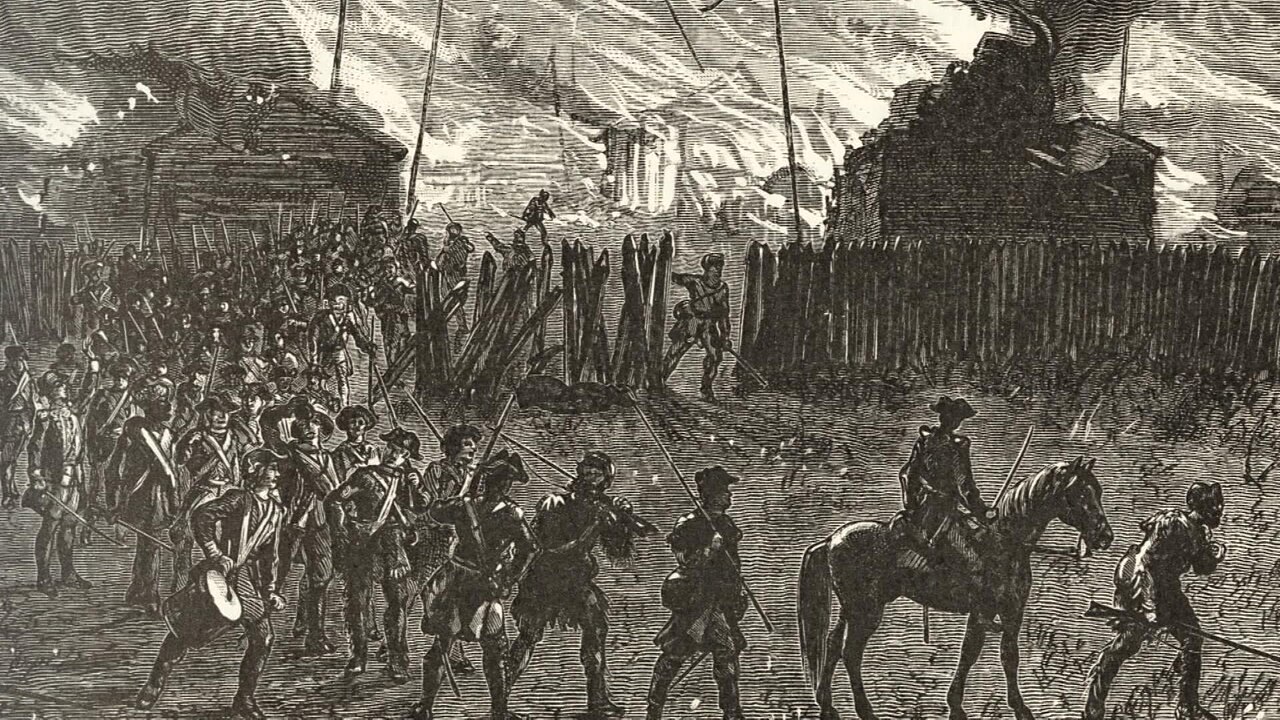
The fight at Olómpali lasted somewhere between ten minutes and half an hour, depending on whose account you trust. It was fought across a pasture dotted with oaks, with the Californios falling back to the adobe and the rebels working forward from cover.
The decisive factor was not numbers (the Californios had them) and not tactics (there were not really any). It was small arms. Ford’s men were carrying American rifles, including what seems to have been at least a handful of brand-new Model 1841 percussion rifles. The Californios were carrying smoothbore muskets and, in some cases, escopetas, a shorter Spanish smoothbore carbine. The rebels could reach the adobe. The defenders could not reach the rebels. One Bear Flag account from inside the fight noted that the enemy “could not shoot as far as the rifles used by some of the Bears,” which is about as clean a one-sentence summary of the tactical problem as you are going to get.
One Californio was killed and one wounded, by the most common count; some sources put the Californio dead as high as two. Ford had no casualties. During the confusion in the adobe, Todd and at least one other captive broke free and joined the rebels outside. De la Torre disengaged and pulled his force back toward San Rafael, which in practice meant he pulled it off the peninsula entirely. Within days he was recrossing to the east side of San Francisco Bay, giving up any real chance of retaking Sonoma.
Aftermath
Olómpali was small. One dead, maybe two, and a short retreat. But it was the first armed clash of what would become the American conquest of California, and it ended the Californio effort to suppress the Bear Flag uprising in the field. Within a week, Frémont’s California Battalion had arrived at Sonoma, the Bear Flag was coming down in favor of the Stars and Stripes, and the Pacific Squadron was taking the coastal ports. By mid-July the war in northern California was, functionally, over.
Camilo Ynitia, the Coast Miwok alcalde whose adobe had been shot up by both sides without his consent, held on to the land. He was the only Native Californian to receive and retain a Mexican land grant in the North Bay, roughly 8,800 acres confirmed by Governor Manuel Micheltorena in 1843. He sold most of it in 1852, under American title, and the core of the rancho eventually passed through several hands before ending up as Olompali State Historic Park, which is where you can walk the battlefield today. The adobe is still there, inside the shell of a later frame house that was built around it. You can see bullet holes in the walls if you know where to look.
PART 2: Wine Regions
The AVA System, Briefly
American wine regions are defined by the Alcohol and Tobacco Tax and Trade Bureau (TTB) under a framework called the American Viticultural Area (AVA) system, introduced in 1980. An AVA is a legally delimited grape-growing region defined by geography, climate, soils, and historical use. A wine can carry an AVA name on the label only if at least 85 percent of the grapes come from within that AVA’s boundaries. Unlike European appellation systems, AVAs do not dictate grape varieties, yields, or production methods. They are a boundary and a claim of origin, nothing more.
The site of the Olómpali skirmish itself sits just outside any current AVA, in the flatlands of northern Marin County. But the routes the Bear Flag parties actually rode (Todd’s loop south through the Petaluma Valley and out to Bodega Bay, Cowie and Fowler’s ride north toward Healdsburg, and Ford’s pursuit down from Sonoma) crossed directly through four of the most important cool-climate AVAs on the West Coast. What follows is those four, in the order the 1846 riders would have hit them.

Sonoma Valley: Where the Revolt Began
Terrain and Soil
Sonoma Valley runs about seventeen miles north from San Pablo Bay, hemmed in by the Mayacamas Mountains on the east and the Sonoma Mountains on the west. That corridor traps daytime warmth and funnels marine fog up from the bay at night. Soils are a mix: volcanic ash and tuff from the old Sonoma volcanic field on the east side, gravelly alluvium along the valley floor, and clay-loam up the western benches.
Grapes Grown
- Whites: Chardonnay, Sauvignon Blanc
- Reds: Zinfandel, Cabernet Sauvignon, Merlot, Syrah
Wines Produced
Sonoma Valley is the oldest serious wine ground in California, and its portfolio reflects that. Old-vine Zinfandel is the signature red, usually brambly and black-peppery with real weight behind it. Hillside Cabernet Sauvignon and Merlot from the eastern slopes are full-bodied and tannic in the Napa idiom, if a bit less polished. Chardonnay here is richer and riper than what you get on the coast, leaning toward stone fruit and honeyed citrus. Sauvignon Blanc is a smaller but growing piece of the story.
Historical Roots
The first vineyards went in at Mission San Francisco Solano in 1823, planted by Franciscan padres using the so-called Mission grape (now known to be the Listán Prieto of Spain). In 1857 Agoston Haraszthy, a Hungarian exile with a talent for self-promotion and European varietals, founded Buena Vista near the old mission and started importing cuttings from France, Italy, and Spain by the thousand. Phylloxera hit hard in the 1880s, Prohibition hit harder, and the valley only really recovered from both by the 1970s. It was established as an AVA in 1981, one of the first in California.
The Bear Flag Revolt kicked off roughly three blocks from where the Mission vineyard had once stood.
Petaluma Gap: Todd’s Route South
Terrain and Soil
The Petaluma Gap is a break in the coastal range between Bodega Bay and San Pablo Bay, and it is the most important wind corridor in northern California viticulture. Pacific air gets pulled east through that gap every afternoon in the growing season, and it keeps the valley floor and the surrounding hills ten to fifteen degrees cooler than the vineyards on either side of it. Elevations run from 100 to 800 feet. Soils are a mix of volcanic clay loam, gravelly sandstone, and uplifted marine sediment.
Grapes Grown
- Whites: Chardonnay
- Reds: Pinot Noir, Syrah
Wines Produced
Pinot Noir is the AVA’s claim to fame. The wind stresses the vines, slows ripening, and gives the fruit smaller berries and thicker skins, which means more color, more tannin, and more of the cool-climate spice and cranberry character that Pinot drinkers chase. Syrah thrives here in a cool-climate mode that has more in common with the northern Rhône than with most California Syrah: peppery, violet-scented, with dark savory fruit. Chardonnay tends to be leaner than Russian River styles, with bright citrus and a chalky finish.
Historical Roots
The Petaluma Valley was dairy and chicken country for most of its modern history. Serious wine planting is a 1990s phenomenon, driven by growers looking for Pinot sites cooler than the Russian River. The AVA was granted in December 2017 and took effect in early 2018, making it one of the youngest major appellations on the North Coast.
Todd and his companion rode south through this valley on their way to Bodega. In 1846 it would have been tall oat grass, oak savanna, and early Mexican ranchos. No vines.
Russian River Valley: Cowie and Fowler’s Ground
Terrain and Soil
The Russian River cuts through the western Sonoma hills on its way to the sea, and the valley around it is shaped by the fog that follows the river inland every morning. The defining soil is Goldridge sandy loam, a well-drained fine sand laid down by ancient ocean deposits, which is perfectly suited to Pinot Noir. Elevations run low, mostly 100 to 400 feet on the valley floor.
Grapes Grown
- Whites: Chardonnay
- Reds: Pinot Noir, Zinfandel
Wines Produced
Russian River Pinot Noir is the flagship. Plush and expressive, with ripe cherry, cola, and baking spice, built on morning fog and a long, slow ripening window. Chardonnay from the valley is rounder and more overtly fruited than the coastal versions, often carrying toasty oak and some malolactic cream. Old-vine Zinfandel from the eastern side of the appellation, closer to Healdsburg, produces jammy, peppery reds in the old Sonoma County tradition. The AVA was established in 1983.
Historical Roots
Italian immigrants planted Zinfandel in this country in the second half of the nineteenth century, and some of those original field blends are still producing fruit today. The Pinot Noir reputation is newer, pushed forward in the 1970s by Joe Rochioli and Davis Bynum. Rancho Sotoyome, where Cowie and Fowler were headed in June 1846, sat in what is now the northeastern corner of the AVA near Healdsburg. They never got there.
Sonoma Coast: Where Todd Got His Powder
Terrain and Soil
Sonoma Coast is the largest of the four AVAs here and the hardest to generalize about. It runs from the Pacific shoreline inland to the western edge of the Russian River and Sonoma Valley AVAs, covering fog-soaked ridgetops, forested ravines, and exposed marine terraces. Soils are mostly fractured sandstone, marine sediment, and thin gravelly loam over bedrock. The best vineyards sit on ridgelines above the summer fog line.
Grapes Grown
- Whites: Chardonnay
- Reds: Pinot Noir
Wines Produced
The best Sonoma Coast Pinot Noir is the most Burgundian wine made in California. Cool, structured, savory, with wild berry and forest-floor notes and the acidity to age for fifteen or twenty years. Chardonnay runs in a similar register: mineral-driven, taut, citrus-inflected, with restrained oak. The AVA was established in 1987, and a more tightly drawn subregion called West Sonoma Coast was carved out in 2022 to distinguish the true coastal ridgeline sites from everything else the original boundary swept in.
Historical Roots
The coast was timber and dairy country into the 1980s. The rugged terrain, the fog, and the remoteness kept it out of serious wine production long after the inland valleys had been planted. Bodega Bay itself, where Todd picked up his powder keg, sits on the edge of the AVA. In 1846 it was a small Russian-built port town in the middle of its last legal year under that flag. Fort Ross, the Russian-American Company’s main California outpost a few miles up the coast, had been sold to John Sutter in 1841.
PART 3: Weapon Spotlight: The U.S. Model 1841 Rifle

The Model 1841 rifle is the weapon that later generations would call the Mississippi Rifle. In the summer of 1846, in California, it did not yet have a nickname. It was just the new Army rifle, and it was showing up on the frontier in small numbers in the hands of volunteers who had gotten in early.
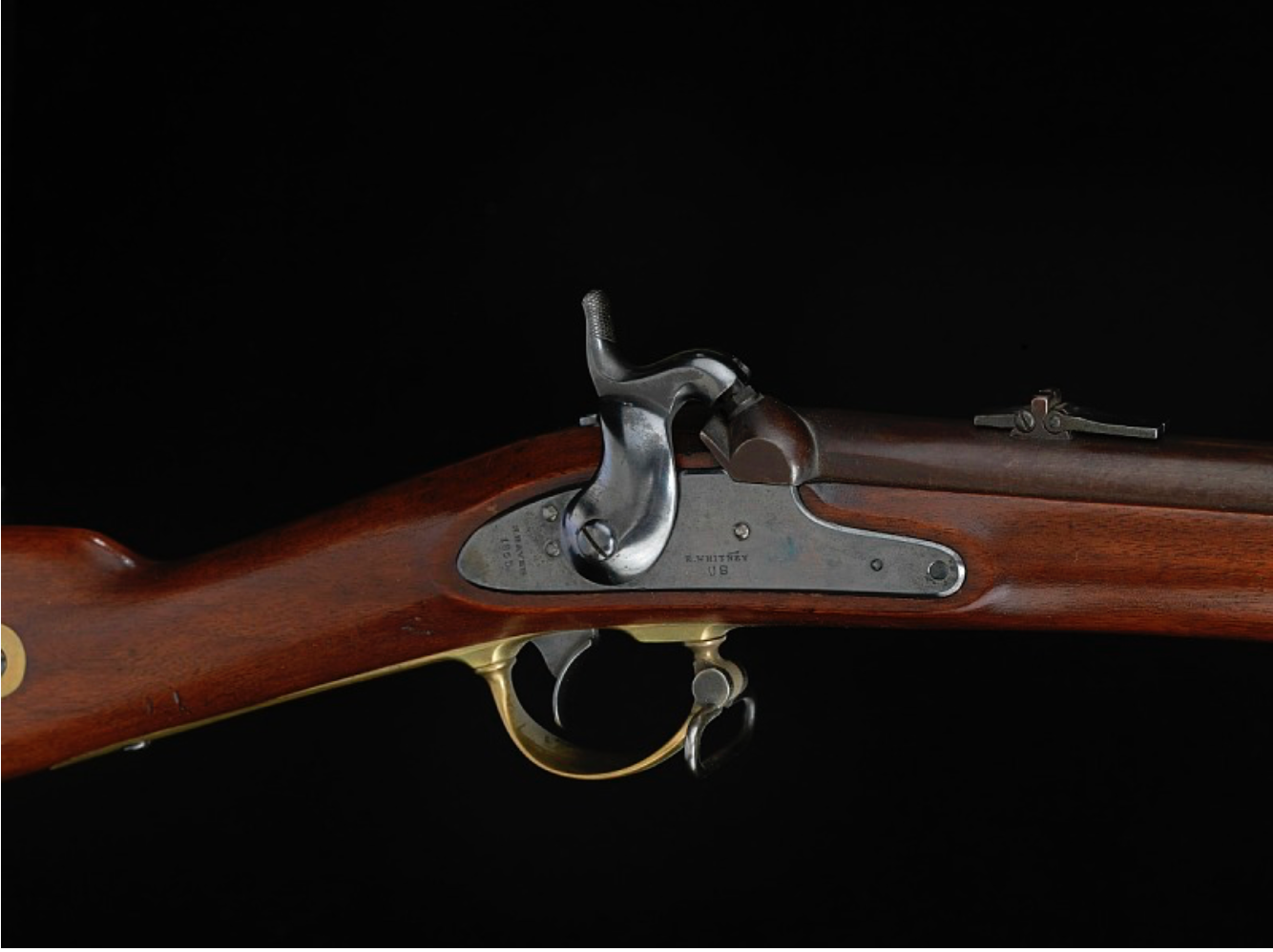
It was a .54-caliber muzzle-loading percussion rifle with a 33-inch rifled barrel, a brass patchbox on the stock, and iron furniture. It weighed a little under ten pounds. It used a standard percussion cap on a nipple set into the breech (no more flint, no more priming pan), which made it substantially more reliable in wet weather than the flintlock muskets it was replacing. The rifling gave it genuine accuracy out to 300 yards in trained hands, which was roughly three times the effective range of the smoothbore musket it was designed to supplement.
It was designed at Harpers Ferry Armory, adopted by the Army in 1841, and first produced in quantity starting in 1846 at Harpers Ferry and under contract from Remington, Robbins and Lawrence, Tryon, and Whitney. The original design had no bayonet lug, because it was intended for rifle companies, skirmishers, and scouts rather than line infantry expected to close with the bayonet.

Advantages and Disadvantages
The M1841’s virtues at Olómpali were the same virtues it would show off at Buena Vista the following February. It outranged anything the opposition was carrying, it held zero well, and it did not misfire in damp conditions the way a flintlock would. At Olómpali, the Californios were shooting smoothbore muskets and escopetas with effective ranges of maybe 75 to 100 yards. Ford’s rebels were shooting something that could reach them from 250 yards out. That is not a close technical gap. That is the difference between being able to shoot back and not.
The downsides were real but, in 1846, acceptable. The .54 round ball did not hit with the authority of the later .58-caliber Minié ball rifles, and the rifle was slower to load than a smoothbore musket because the patched ball had to be rammed against the rifling. The lack of a bayonet lug meant it was not a line-infantry weapon, which mattered in European-style volley-and-charge engagements but mattered almost not at all in the kind of loose skirmishing that characterized the California fighting and the volunteer war in general.
In the decade after Mexico, most surviving M1841s were rebored from .54 to .58, fitted with long-range rear sights, and given bayonet lugs, which turned them into effective front-line rifles for the first year or so of the Civil War.
Legacy
The Mississippi name came from Jefferson Davis and his 1st Mississippi Rifles at the Battle of Buena Vista, on February 22 and 23, 1847, where Davis’s regiment used the new rifle to break Mexican cavalry charges at ranges the Mexican lancers had no idea they were vulnerable at. After Buena Vista, the M1841 became the rifle every state militia wanted, and in the American imagination the weapon and the regiment that made it famous became inseparable.
Technologically, the M1841 sits at a hinge point. It was the last generation of American military rifle designed around the round ball, and it was among the first American service arms designed from the start for percussion ignition and for machine manufacture with substantially interchangeable parts. (The Hall M1819 breechloader beat it to true interchangeability by more than twenty years, so the claim of “first” does not hold up; the claim of “widely produced on the interchangeable-parts principle” does.) Within a decade it would be obsolete. Within two it would be a museum piece. But in June 1846, in a pasture in northern Marin County, a handful of them changed the arc of a small fight and, through that fight, the pace of the American takeover of California.
Conclusion
Olómpali is not a battle most people outside California have heard of. It killed one or two men on one side and none on the other. It was over in half an hour. But it was the fight that settled whether the Bear Flag Republic was going to be stamped out or was going to hold long enough to hand itself to the U.S. Navy, which is exactly what happened a week later.
What made it possible, at least in part, was a new rifle that almost nobody in California had seen before, in the hands of a volunteer company that had been a militia for about ten days. And the ground they rode across, chasing Padilla and looking for Todd, is now some of the most valuable wine country in the United States: Sonoma Valley where the revolt started, the Petaluma Gap where Todd rode south for powder, the Russian River Valley where Cowie and Fowler were caught and killed, and the Sonoma Coast where the powder keg itself came from. In 1846 it was oat grass and oaks. A hundred and forty years later it was Pinot Noir.
Sources
Books
- Bauer, K. Jack. The Mexican War, 1846-1848. New York: Macmillan, 1974. (Standard military history of the U.S.-Mexican War, including the California campaign and the Bear Flag Revolt.)
- Harlow, Neal. California Conquered: The Annexation of a Mexican Province, 1846-1850. Berkeley: University of California Press, 1982. (Detailed political and military account of the American takeover, with coverage of the Bear Flag Revolt, the actions at Sonoma and Olómpali, and Frémont’s role.)
- Rosenus, Alan. General M. G. Vallejo and the Advent of the Americans. Albuquerque: University of New Mexico Press, 1995. (Biography of Mariano Vallejo that covers the Bear Flag arrests and the Californio perspective on the events of June 1846.)
- Walker, Dale L. Bear Flag Rising: The Conquest of California, 1846. New York: Forge, 1999. (Popular narrative history of the Bear Flag Revolt, including the Cowie-Fowler killings, the Ford expedition, and the skirmish at Olómpali.)
- Bilby, Joseph G. A Revolution in Arms: A History of the First Repeating Rifles. Yardley, PA: Westholme, 2006. (Covers nineteenth-century U.S. military small arms development, including the transition from flintlock to percussion and the place of the M1841 in that arc.)
- Coggins, Jack. Arms and Equipment of the Civil War. New York: Doubleday, 1962; reissued Mineola: Dover, 2004. (Standard reference on U.S. military small arms through the Civil War, with specifications and service history for the M1841 Mississippi Rifle.)
Websites
- “Olompali State Historic Park.” California Department of Parks and Recreation. https://www.parks.ca.gov/?page_id=465 (Official park page with background on the Coast Miwok settlement, the Ynitia land grant, and the 1846 skirmish.)
- “The Battle of Olompali.” Olompali People. https://www.olompali.org/history/battle-of-olompali/ (Nonprofit site maintained by the park’s support organization; includes the surviving participant accounts of the fight.)
- “Bear Flag Revolt.” California State Military Museum. http://www.militarymuseum.org/BearFlag.html (State-run reference on the June 1846 uprising, including the Cowie and Fowler killings and the Ford expedition.)
- “Petaluma Gap AVA Final Rule.” U.S. Alcohol and Tobacco Tax and Trade Bureau, Federal Register notice, December 7, 2017. https://www.ttb.gov/wine/established-avas (TTB documentation of the boundary, climate justification, and effective date for the Petaluma Gap AVA.)
- “Sonoma Valley AVA.” Sonoma County Vintners. https://sonomavintners.com/discover-sonoma-wine-country/sonoma-valley/ (Regional trade-association overview of the Sonoma Valley AVA, its climate, soils, and grape varieties.)
- “Russian River Valley Winegrowers.” RRVW. https://rrvw.org (Trade group site for Russian River Valley growers; covers AVA boundaries, soils, and varietal focus.)
- “West Sonoma Coast AVA.” U.S. Alcohol and Tobacco Tax and Trade Bureau. https://www.ttb.gov/wine/established-avas (TTB record of the 2022 carve-out within the original Sonoma Coast AVA.)
- “U.S. Model 1841 Percussion Rifle.” Springfield Armory National Historic Site, National Park Service. https://www.nps.gov/spar/learn/historyculture/index.htm (Park Service reference on nineteenth-century U.S. military small arms, including the M1841.)
Primary / Participant Accounts
- Ford, Henry L. “Bear Flag Revolt.” Manuscript dictation, Bancroft Library, University of California, Berkeley, 1878. (First-person account by the commander of the Bear Flag detachment at Olómpali, recorded by Hubert Howe Bancroft’s staff.)
- Todd, William L. Letter describing his captivity and escape, reprinted in The Century Magazine, 1891. (Participant account by the painter of the original Bear Flag, describing his capture near Two Rock and his rescue at Olómpali.)