PART 1: Military History
A Family Business Built on Defeat
In 241 BCE, the First Punic War ended, and Carthage lost. After more than two decades of fighting Rome for control of Sicily, the terms were brutal. Carthage agreed to evacuate Sicily, hand over Roman prisoners without ransom, stay out of allied affairs, and pay an enormous indemnity (originally 2,200 talents of silver over twenty years, hardened by the Roman assembly to 3,200 talents over ten). Carthaginian warships were forbidden in Italian waters except for one ship to ferry tribute. The bigger naval problem was simpler than treaty language: most of the Carthaginian fleet was already at the bottom of the sea after the defeat at the Aegates Islands in March 241 BCE. The navy that had once challenged Rome for the western Mediterranean was no longer there to be restricted.
Then Rome twisted the knife. While Carthage was still dealing with a revolt of its own unpaid mercenaries (the so-called Truceless War, 241 to 237 BCE), Rome seized Sardinia and Corsica in 238 BCE and demanded an additional 1,200 talents for the privilege of avoiding another war. The Greek historian Polybius called it unjust. The Carthaginians remembered it for exactly what it was.
Hamilcar Barca: The General Who Refused to Quit
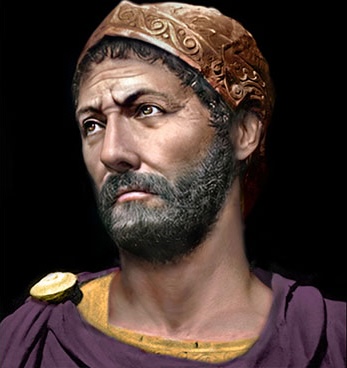
The person who found a way forward was Hamilcar Barca, Hannibal’s father.

Hamilcar came from a Carthaginian noble family of Phoenician descent. The family name, Barak, means “lightning,” and there is a fair argument that he earned it. He took command of Carthaginian land forces in Sicily in 247 BCE at the age of about twenty-eight, with Carthage’s last footholds on the island (Drepana and Lilybaeum) under Roman siege. Rather than fight pitched battles he could not win, he occupied a fortified position at Heircte, near modern Palermo, and ran a guerrilla campaign for years out of mountain country, raiding Roman supply lines and even the coast of southern Italy. In 244 BCE he seized Mount Eryx, took out the Roman garrison there, and continued harassing Rome from a new high-ground base. He never lost his army. When the Carthaginian fleet was destroyed at the Aegates Islands in 241 BCE and the home government decided the war was over, it was Hamilcar who was authorized to negotiate the surrender.
What truly set the Barcid family apart, though, was what came next. The Mercenary War broke out almost immediately after the treaty with Rome, when tens of thousands of unpaid Carthaginian mercenary troops, joined by African subjects in revolt, turned on the city itself. For roughly four years, the war went badly for Carthage. The army elected Hamilcar supreme commander. He won a string of victories, including the Battle of the Bagradas River and the brutal blockade-and-starvation engagement Polybius calls “the Saw,” where the bulk of the rebel army was trapped in a ravine and destroyed. By the time the revolt was finally crushed in 237 BCE, Hamilcar was the most prestigious soldier in Carthage and the head of a political faction with the credibility to act on its own terms.
That credibility is what made Iberia possible. Carthage as a whole did not necessarily want a new war. Hamilcar did, or at least he wanted the resources to make one possible. With his political standing at its peak, he was authorized to lead what remained of the Carthaginian military westward to Iberia, crossing to Gades (modern Cádiz) in 237 BCE. He brought along his nine-year-old son Hannibal and his son-in-law Hasdrubal. Iberia was not a vague dumping ground for an unwanted general. It was a deliberate choice by a commander who had earned the political room to make it.
Why Iberia: Silver and Soldiers
Hamilcar did not go to Iberia looking for plunder. He went there because Carthage urgently needed two things, and the peninsula had both.
The first was money. The indemnity owed to Rome was massive, and the seizure of Sardinia made the financial pressure worse. Carthage had lost Sicily, the agricultural base of its public revenue, and the African countryside had only just stopped burning. Iberia, by contrast, sat on top of some of the richest silver deposits in the western Mediterranean. Once Hamilcar got control of the river routes leading to the Sierra Morena mining region (the Guadalquivir and Guadalete corridors), Gades began minting silver coins from 237 BCE forward. That silver paid his army and shipped home to help service the debt to Rome. The mines were not a side benefit; they were the financial engine that made Barcid Iberia possible.
The second was manpower. Carthage had always relied on mercenaries and subject levies to do its fighting, and the Mercenary War had just demonstrated how dangerous that arrangement could be when the bill came due. Sicily was gone as a recruiting ground. Many of the African allied communities had revolted and were now under tighter Carthaginian control rather than free contributors of troops. Iberia offered an alternative. The peninsula’s tribes were experienced fighters with strong infantry and cavalry traditions, and Hamilcar could recruit and train them without going through the Carthaginian senate’s purse. Over the next two decades, Iberian and Celtiberian troops would form the backbone of Barcid armies.
The naval question is where Carthage’s options narrowed most. The treaty kept Carthaginian warships out of Italian waters, but the deeper problem was that there were not many warships left to redeploy. Carthage no longer had the ships, the crews, or the cash to rebuild a fleet capable of contesting Rome at sea. A land empire in Iberia, reached via a coastal march along the African shore and across the Pillars of Hercules, was a way around that ceiling. It used what Carthage still had (a tough army and an experienced commander) and avoided what it had lost (the navy). Hamilcar’s western pivot was not just about Iberia. It was about choosing the only theater where Carthage could still rebuild power without needing Roman permission.
Eight Years, One River
Hamilcar spent eight or nine years in Iberia, building up the Barcid sphere through alliances, bribery, and force. Some Iberian tribes joined willingly. Others were broken in the field. Slowly, the territory under Carthaginian control widened from the southern coast inland and northeast along the Mediterranean shore.
His luck ran out in the winter of 229/228 BCE. The most common version of the story comes from Diodorus, with variations in Polybius and Appian: Hamilcar was campaigning against the Oretani (or a related Iberian people) and laying siege to a town the sources call Helike (Helice). A local king, sometimes named as Orissus, brought up a relief force, in some accounts after pretending to be an ally. The Carthaginians broke and retreated under pressure, and Hamilcar drowned in a river crossing during the withdrawal. Ancient sources do not agree on which river. Modern guesses include the Júcar and the Vinalopó in southeastern Iberia. Several traditions add that he deliberately drew pursuers away from his sons, who escaped with a separate group. Polybius, more soberly, just says Hamilcar “fell in battle” in Iberia. The details have been argued over for centuries, but the operational outcome is clear. The senior commander of the Barcid project was dead, in a field accident at the wrong end of a hard winter campaign, and the family had to figure out what came next without him.
Hasdrubal the Fair
Command in Iberia passed to Hasdrubal the Fair, Hamilcar’s son-in-law (his daughter’s husband) and Hannibal’s brother-in-law. The Barcid project in Iberia was never one man’s work. Hamilcar created the opening. Hasdrubal gave it political structure.

Around 227 BCE, Hasdrubal founded Carthago Nova, “New Carthage,” on the southeastern coast (modern Cartagena), giving the family command something it had lacked: a real capital with a deepwater harbor, mineral wealth nearby, and the administrative weight to match growing ambitions. Where Hamilcar had favored campaigning, Hasdrubal favored diplomacy and infrastructure. He extended Carthaginian influence by treaty and marriage (he himself married an Iberian princess) and consolidated what his father-in-law had taken. During his tenure, Rome and Carthage negotiated what historians call the Ebro agreement, usually dated to 226 BCE, under which Hasdrubal agreed not to cross the Ebro River with an armed force.
The Ebro is worth picturing on a map. It rises in the Cantabrian Mountains in northern Spain, near the modern town of Reinosa, and runs roughly 930 kilometers southeast across the north of the Iberian Peninsula, finally emptying into the Mediterranean in southern Catalonia near modern Tarragona. It is the longest river in Spain that does not flow into the Atlantic, and on a map it cuts a clean diagonal across the peninsula’s upper third. The agreement effectively split Iberia into two zones of influence: north of the Ebro, off-limits to Carthaginian armies; everything south of it, more or less Hasdrubal’s to organize.
Hasdrubal did not get to enjoy the peace he had built. In 221 BCE, he was assassinated. The story preserved by Polybius, Livy, and later writers identifies the killer as a Celtic (or Celtiberian) house slave (or attendant) belonging to a chieftain that Hasdrubal had earlier executed. The sources name the chieftain “Tagus” in some retellings. The slave had waited for an opening, killed Hasdrubal in his quarters, and was then captured. Several traditions say he was tortured to death and laughed through it, satisfied that he had taken his vengeance. As with so much of this period, you can argue with the dramatic flourishes. The political fact stands clear: a Carthaginian commander running an empire-in-progress was murdered in 221 BCE by a man avenging an earlier execution, and the Iberian command suddenly had an opening at the top.
Hannibal Takes Command
Command passed to Hannibal. He was twenty-six (a handful of older sources say twenty-five, depending on how they count from his birth in 247 BCE). The army acclaimed him in the field and the Carthaginian senate confirmed the appointment. Ancient writers preserved the story that Hamilcar had once made the boy swear eternal hostility to Rome. Whether that scene happened the way later tradition told it is impossible to say, but the larger point stands. Hannibal came of age inside a family command that grew out of defeat and operated under constant pressure from a Roman rival. That command had spent nearly two decades building the tools to push back. By the time he inherited the Iberian command, the Barcid project was no longer an experiment. It had silver behind it, seasoned troops in front of it, and ambitions large enough to make Rome nervous.
Saguntum: The City in the Middle
The place that turned tension into crisis was Saguntum, an Iberian settlement on a commanding hilltop above the coastal corridor north of modern Valencia. The site still dominates the landscape today. Walk through Sagunto and you can see why the city mattered: it sits on a long, narrow ridge with views in every direction, controlling movement along the coast and inland. That position made it valuable for trade and defense long before anyone in Carthage or Rome bothered to think about it.
The problem was diplomatic, and it was genuinely messy. Saguntum sat south of the Ebro, which on the face of the Ebro agreement placed it inside the Carthaginian sphere. But the city had cultivated ties with Rome. Roman envoys had involved themselves in Saguntine politics. Whether that Roman connection amounted to a formal alliance, a looser friendship (amicitia), or simply meddling depends on which ancient source you trust, and modern historians still argue about it. What no one disputes is that by the late 220s, Saguntum was a city with one foot in each camp, south of the line Rome and Carthage had drawn but aligned with the power on the other side of it.
Hannibal treated Saguntum as a hostile obstacle inside territory he controlled. Rome treated it as a client under its protection. Neither side was entirely wrong, and neither was willing to back down. The quarrel that led to war did not arise because someone crossed a clear boundary. It arose because Rome and Carthage could no longer agree on what the boundary meant, or who had the right to define political influence in eastern Iberia.

The Siege: 219 BCE
Hannibal moved against Saguntum in 219 BCE, and the city did not go quietly.
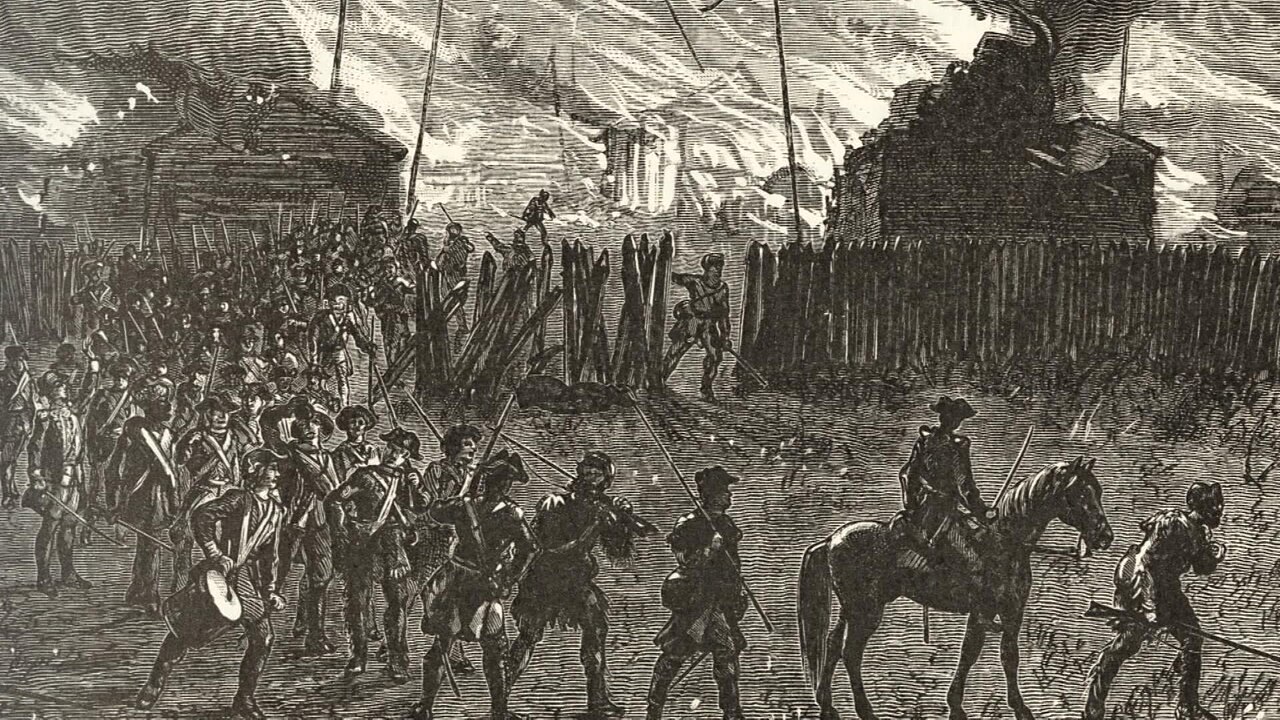
The hilltop defenses forced him into a formal siege. There was no quick storm to be had against a walled city on a ridge, and Hannibal knew it. He brought up siege works and pushed covered approaches toward the walls. When those were in place, he committed battering rams to breach the walls. Livy’s account of the siege gives us enough detail to see that this was real engineering, not theater.
In one phase of the fighting, Hannibal himself approached the wall too closely and took a heavy javelin through the thigh. The wound was serious enough to pull him off the field and suspend major operations while he recovered. That single detail tells you something about the intensity of the defense: the Saguntines were not waiting to be overwhelmed. They used the height of their walls and towers to pour missiles down on the attackers and launched sorties to disrupt the siege works.
After Hannibal returned, Maharbal took forward command of a renewed assault and brought three battering rams against the wall simultaneously. The combined impact smashed a significant stretch of the fortification. The defenders fell back. The fighting went on, but from that point the city’s position was failing.
Saguntum’s fatal weakness was not its walls. It was the fact that no one came to help. Roman envoys protested. Rome later used the siege as its casus belli for war. But no Roman army marched to break the siege while the city was still holding out. Saguntum fought alone for roughly eight months. When it finally fell, late in 219 BCE, the diplomatic crisis became an open break.
The Crossroads: From Saguntum to the Ebro
The fall of Saguntum did not start the Second Punic War by itself. It started the diplomatic chain that ended in war. Roman envoys traveled to Carthage early in 218 BCE, demanded that Hannibal be handed over, and were refused. The famous moment Livy preserves (Quintus Fabius Maximus offering peace or war from the folds of his toga, with the Carthaginian senate snapping back to take whichever Rome preferred) captures the mood, even if the literal staging is too neat to fully trust. Rome declared war in the spring of 218 BCE.
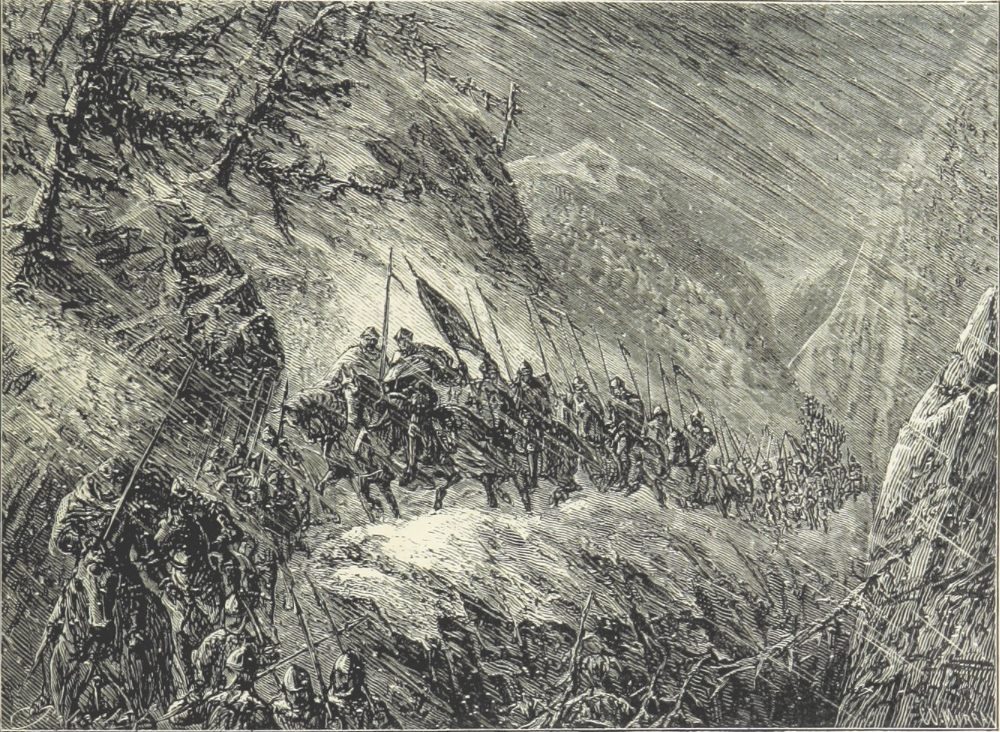
Hannibal had already decided how to fight it. He spent the winter at Carthago Nova preparing an army for a march no Carthaginian had attempted: north along the coast, across the Ebro, through the Pyrenees, across southern Gaul, over the Alps, and into Italy itself. Crossing the Ebro was the legal break. The 226 BCE agreement had set that river as the northern limit of Carthaginian armed movement, and stepping across it was, in treaty terms, the act of war Rome had been waiting for. Hannibal crossed the Ebro in April or May of 218 BCE.
That is where the next article begins. Saguntum is where the political peace failed. The Ebro is where the political failure became a military invasion. Both moments matter, and they belong to different stories.
Where Wars Actually Begin
I think it is worth pausing on what that sequence tells us. Hannibal did not begin the Second Punic War by crossing the Alps. He began it in eastern Iberia, at a city with Roman ties sitting inside a Barcid sphere of influence that had grown too strong and too close to Roman interests. The march through southern Gaul, the Alpine crossing, the string of annihilating victories in Italy: all of that came later. The war’s first act of force was here, on a ridge in Valencia, with rams against the walls.
Great wars often begin in places that seem peripheral until the moment they become impossible to ignore. Saguntum sat at a frontier where diplomacy, local politics, and family ambition had already stretched the peace past the point of recovery. The city did not cause the Second Punic War by itself. What it did was show how little peace was actually left.
PART 2: Wine Regions
Spain’s Wine Classification System
Spain organizes its wine regions through a system of geographical indications administered under EU rules and overseen by regional regulatory councils (Consejos Reguladores). The top tier is DOCa (Denominación de Origen Calificada), reserved for regions that have met strict standards over an extended period. Below that sits DO (Denominación de Origen), the workhorse designation for quality wine tied to a specific place, with rules governing permitted grape varieties, yields, and production methods. Below DO come Vino de Pago (for single-estate wines), IGP or Vino de la Tierra (a broader geographic indication with more flexibility), and Vino de Mesa (table wine without geographic designation). Only two regions hold DOCa status: Rioja and Priorat. Everything else at the quality end operates under DO.
For this post, the two designations that matter are Valencia DO and Alicante DOP, which between them cover the eastern Iberian coast closest to Saguntum. Neither is a household name outside Spain, which is part of what makes them interesting.
Valencia DO: The Wine Country Around Saguntum

Terrain and Soil
Valencia DO covers more ground and more variety than most people outside Spain expect. The denomination is divided into four subzones: Alto Turia (higher and cooler, in the interior), Valentino (the central area around the city of Valencia), Moscatel de Valencia (a subzone defined by a grape rather than just geography), and Clariano (farther south and inland, transitioning toward warmer, drier conditions). That spread means the denomination includes everything from near-coastal vineyards with full Mediterranean influence to higher-elevation sites where altitude creates a different growing season.
For the Saguntum story, the relevant geography is the meeting of coast and hill country north of Valencia. The Saguntine ridge sits at the edge of a corridor that connects the Mediterranean coast to interior Iberia. That corridor carried trade and armies in antiquity, and it still carries agriculture today. The soils across much of the DO run to limestone and clay, with alluvial material closer to the coast and the river valleys.
Grapes Grown
Valencia authorizes a wide range of varieties, which is both a strength and a branding problem.
- Whites: Merseguera (the most characteristically Valencian of the group), Macabeo, Malvasía, Moscatel de Alejandría, Pedro Ximénez, and Verdil.
- Reds: Monastrell, Bobal, Garnacha Tintorera, Tempranillo, Garnacha, and Cabernet Sauvignon, along with smaller plantings of international varieties.
The native grapes are the interesting ones. Merseguera in particular does not grow in many other places. Bobal, one of the most widely planted red varieties in all of Spain by acreage, has been dismissed as a bulk grape for decades but is getting a second look from producers who think it has more to say.
Wines Produced
Valencia DO produces everything from dry reds to sweet Moscatel wines, with notable diversity from one subzone to another. The Moscatel-based dessert wines remain the denomination’s best-known specialty internationally. The reds, often built on Monastrell or Bobal (sometimes blended with Tempranillo or Cabernet), range from everyday wines to more serious bottlings that benefit from old vines and restrained yields. The whites tend toward fresh, Mediterranean-styled wines meant for early drinking, though producers working with Merseguera and Verdil are pushing for more complexity.
The denomination does not have the name recognition of Rioja or Priorat, and it has spent decades fighting the perception that Valencia means bulk wine. That fight is not over, but the quality trajectory is upward.
Historical Roots
Viticulture on the eastern Iberian coast predates both Rome and Carthage. The Greeks, Phoenicians, and indigenous Iberians all cultivated grapes in this part of the peninsula before anyone drew a line at the Ebro. By the time Hannibal besieged Saguntum, the coastal corridor was already agricultural country tied to Mediterranean trade routes. That does not mean we can draw a straight line from a third-century-BCE vineyard to a modern Valencia DO bottling, and I am not going to try. What it does mean is that the landscape Hannibal fought over was cultivated and commercially connected, not wilderness. The modern wine denomination is a recent legal structure, but the cultivation behind it is very old.
Alicante DOP: The Southern Arc
Terrain and Soil
Alicante DOP sits farther south along the coast and is divided into two principal zones: La Marina (coastal, influenced by the sea) and Vinalopó (inland, warmer, and drier). The conditions in both zones are classically Mediterranean: hot summers, limited rainfall, a long growing season that rewards drought-resistant varieties. The soils vary from limestone and marl in the higher inland areas to sandier compositions closer to the coast.
This is country that has adapted to heat and water scarcity over centuries. The vines here tend to be old and low-yielding, rooted deep into dry ground, which produces concentrated fruit and wines with real structure.
Grapes Grown
- Whites: Moscatel de Alejandría is the dominant white variety, along with Macabeo and Airén.
- Reds: Monastrell is king in Alicante, both by acreage and by reputation. Garnacha Tintorera (Alicante Bouschet) and Bobal round out the red plantings.
Monastrell (known as Mourvèdre in France) defines the red wine identity of this part of Spain.
Wines Produced
Alicante produces dry reds, whites, and sweet wines, but the denomination’s most singular product is Fondillón. This is an aged, oxidative wine made from overripe Monastrell grapes, aged in barrel for a minimum of ten years, and produced in a style that has almost no parallel elsewhere. Fondillón was famous across Europe in the sixteenth and seventeenth centuries, and while it belongs to a much later era than Hannibal’s siege, it serves as proof that the southeastern Iberian coast developed wine traditions of genuine depth and originality. The fact that a wine this distinctive has survived into the modern era says something about the stubbornness of regional culture along this coast.
Historical Roots
Alicante’s own regulatory body claims a wine history stretching back three thousand years. I would handle that number carefully, but the broader point holds. The southeastern coast of Iberia has been producing wine for a very long time, and the Phoenician trading posts that preceded Carthaginian control in the region were part of the commercial network that carried wine and silver across the western Mediterranean. Alicante widens the geographic frame beyond Saguntum itself and helps us see the eastern Iberian coast as what it was in Hannibal’s time: not a peripheral backwater, but a commercially active zone worth fighting over.
PART 3: Weapon Spotlight
The Battering Ram at Saguntum

For this post, the weapon that matters is not a field weapon. It is a siege engine: the battering ram.
Livy’s account of the siege leaves no doubt that Hannibal’s army did not take Saguntum by intimidation or by a quick escalade over the walls. The Carthaginians pushed siege works forward and built covered approaches before committing heavy rams to break down the city’s fortifications. When Maharbal took forward command of one major assault, he deployed three rams simultaneously against the wall and brought down a substantial section of it. The ram is central to any honest account of what happened at Saguntum.
The concept was simple. A heavy timber beam, usually fitted with a metal striking head (often shaped into a ram’s head, which gave the engine its name), was slung from an overhead frame and swung repeatedly against a gate, a wall joint, or a section of masonry. The crews operating the ram were protected by a mobile shed or penthouse with a reinforced roof to deflect missiles from the defenders above. By the third century BCE, Mediterranean armies had been refining this technology for generations. The Assyrians used siege rams centuries earlier. The Greeks and Macedonians developed sophisticated versions. Carthage, heir to Phoenician and broader Hellenistic military traditions, fielded rams that reflected all of that accumulated experience.
At Saguntum, the ram mattered because the city’s defenses took escalade off the table. You do not storm a walled hilltop city defended by determined fighters who have height, towers, and clear fields of fire on their side. You engineer your way through the walls. That is what Hannibal did, and the ram was the tool that made it possible.
How It Worked, and Where It Failed
The battering ram’s strength was persistence. Walls that could shrug off missiles and repulse a hurried assault might still crack under hours of repeated blows delivered at the same point. The ram also worked as part of a system. Covered approaches protected the crews during the advance. Towers and missile platforms kept defenders suppressed while the ram was operating. At Saguntum, that combination turned a defended hilltop into a city under slow, mechanical reduction.
The weaknesses were real. A ram crew needed to get the engine up against the wall, which meant crossing open ground under fire. The overhead shed protected against most missiles but not against everything. Defenders threw fire and dropped heavy stones on the penthouse roofs. They launched sorties to destroy the engines before they could do their work. The time involved was considerable. Saguntum held out for roughly eight months. Hannibal himself was badly wounded approaching the wall, which tells you the defenders were not passive. The battering ram was powerful, but it demanded patience and engineering support, along with a willingness to absorb losses over months.
What Saguntum Tells Us
The battering ram at Saguntum is worth remembering because it corrects a common distortion of Hannibal’s image. Before he became the general who crossed the Alps with elephants and annihilated Roman armies at Trebia, Trasimene, and Cannae, he was a siege commander directing engineers and assault crews against a fortified city on a hilltop. That is a different kind of military problem, and the fact that he solved it (at considerable cost and over many months) tells us something about the range of what Carthage could do in the field. The Second Punic War opened not with Alpine spectacle, but with rams against walls on the Iberian coast.
Conclusion
The Barcid project in Iberia took nearly twenty years to build. Hamilcar started it. Hasdrubal gave it a capital. Hannibal inherited the result and pushed it to the breaking point. Saguntum was where that longer process collided with Roman interests in a way neither side could walk away from.
I paired this story with Valencia and Alicante because the war’s opening act happened in wine country that is still producing today. The eastern Iberian coast that Hannibal fought over was not empty ground waiting for a battle to give it meaning. It was cultivated and commercially connected, tied to Mediterranean trade routes that ran back centuries before the siege. Valencia DO and Alicante DOP are the modern expressions of that same coastal agricultural identity. The connection is not a straight line from Hannibal’s camp to a modern bottling, and I am not pretending it is. But the land is the same land, worked by people who still grow grapes on ground that once sat between two empires.
This post opens the Vini Bellum series because Saguntum is where the war began. Not at the Alps. Not at Cannae. Here, on a ridge above the Valencian coast, where a family’s ambition, a city’s loyalties, and a failing peace all came together at once.
Sources
Books
- Goldsworthy, Adrian. The Punic Wars. London: Cassell, 2000. (Comprehensive military and political history of all three Punic Wars, covering the transition from the First Punic War through the Barcid recovery in Iberia and the siege of Saguntum.)
- Lazenby, J. F. Hannibal’s War: A Military History of the Second Punic War. Norman: University of Oklahoma Press, 1998. (Focused military history of the Second Punic War, with detailed treatment of the political setting, the Ebro agreement, and the opening phase at Saguntum.)
- MacDonald, Eve. Carthage: A New History. New York: W. W. Norton, 2026. (Recent interpretive history of Carthage covering the Barcid family, the Iberian command, and the broader political and economic context behind the Second Punic War.)
Websites
- “3000 Years of Alicante Wine History.” Alicante PDO. https://vinosalicantedop.org/3000-years-of-alicante-wine-history/?lang=en (Historical overview of wine production in the Alicante region, including the Fondillón tradition and the southeastern Iberian wine heritage.)
- “Ancient Rome: The Middle Republic, 264-133 BC.” Encyclopaedia Britannica. https://www.britannica.com/place/ancient-Rome/The-middle-republic-264-133-bc (Survey of Roman political and military history during the Republican period, including the Ebro agreement and its chronology.)
- “Cartagena.” Encyclopaedia Britannica. https://www.britannica.com/place/Cartagena-Spain (Geographic and historical entry on modern Cartagena, ancient Carthago Nova, covering the city’s Carthaginian founding and strategic position.)
- “Hamilcar Barca.” Encyclopaedia Britannica. https://www.britannica.com/biography/Hamilcar-Barca (Biographical entry on Hamilcar Barca covering his role in the First Punic War, the Mercenary War, and the founding of the Barcid command in Iberia.)
- “Livy’s History of Rome: Book 21.” York University. https://www.yorku.ca/pswarney/Texts/livy-21.htm (English translation of Livy Book 21, the primary ancient source for the siege of Saguntum, including Hannibal’s wounding, Maharbal’s use of battering rams, and the fall of the city.)
- “Punic Wars.” Encyclopaedia Britannica. https://www.britannica.com/event/Punic-Wars (General overview of all three Punic Wars, covering causes, major engagements, and outcomes of the Roman-Carthaginian conflicts.)
- “Regions.” Alicante PDO. https://vinosalicantedop.org/regions/?lang=en (Official geographic and viticultural profile of Alicante DOP’s two principal zones, La Marina and Vinalopó, with grape varieties and production characteristics.)
- “Second Punic War.” Encyclopaedia Britannica. https://www.britannica.com/event/Second-Punic-War (Overview of the Second Punic War covering Rome’s seizure of Sardinia and Corsica, the Barcid recovery in Iberia, and the wider chronology from Saguntum through the war’s conclusion.)
- “Valencia DO.” Foods and Wines from Spain. https://www.foodswinesfromspain.com/content/icex-foodswines/en/wine/regions/the-mediterranean-coast/valencia-do.html (Official ICEX profile of Valencia DO covering subzones, authorized grape varieties, wine styles, and the denomination’s regulatory structure.)