
The Frontier Fractures: The Iroquois and the American Revolution
The Finger Lakes are known today for vineyards, wine trails, and some of the best Riesling produced in North America. But before any of that, this was contested ground in the American Revolution. In 1779, the Sullivan Campaign moved directly through this region with a clear objective: destroy the ability of the Iroquois nations allied with Britain to sustain war. The campaign reshaped the land. What followed, over the next several decades, was a transformation from Indigenous agricultural landscape to one of the most important wine regions in the United States.
Before the war, this region was the heart of Seneca and Cayuga territory within the Haudenosaunee Confederacy. These were not marginal frontier settlements. They were established agricultural communities, supported by extensive fields and orchards that had developed over generations. The Confederacy itself functioned as a sophisticated political alliance, balancing diplomacy, trade, and military power across the Northeast.
The American Revolution fractured that system. While some nations, particularly the Oneida, aligned with the Americans, others—including the Seneca and Cayuga—sided with the British. The decision was rooted in strategy. British policy had attempted, at least in principle, to limit westward expansion. American settlement posed an immediate and growing threat to Indigenous land. For leaders like Joseph Brant, alliance with Britain offered the best chance of preserving autonomy.
That decision made the Finger Lakes a target.

The Sullivan Campaign: March, Battle, and Scorched Earth
By 1779, the war along the northern frontier had become a serious strategic problem for the Continental Army. Loyalist and Iroquois raiding parties struck settlements across New York and Pennsylvania, disrupting supply lines and forcing Washington to divert resources away from the main theaters of the war. This was not a peripheral issue. It threatened the stability of the entire northern frontier. Washington’s response was deliberate.
In the spring of 1779, he ordered a campaign designed not simply to defeat enemy forces in the field, but to eliminate their ability to operate. His instructions to Major General John Sullivan were clear. Carry the war into Iroquois country and destroy the towns, crops, and infrastructure that sustained resistance.
The scale of the force reflected the importance of the mission. Nearly 4,000 Continental troops were committed to the campaign, roughly a third of Washington’s available field army. It was one of the largest coordinated operations undertaken by the Continental Army during the Revolution.
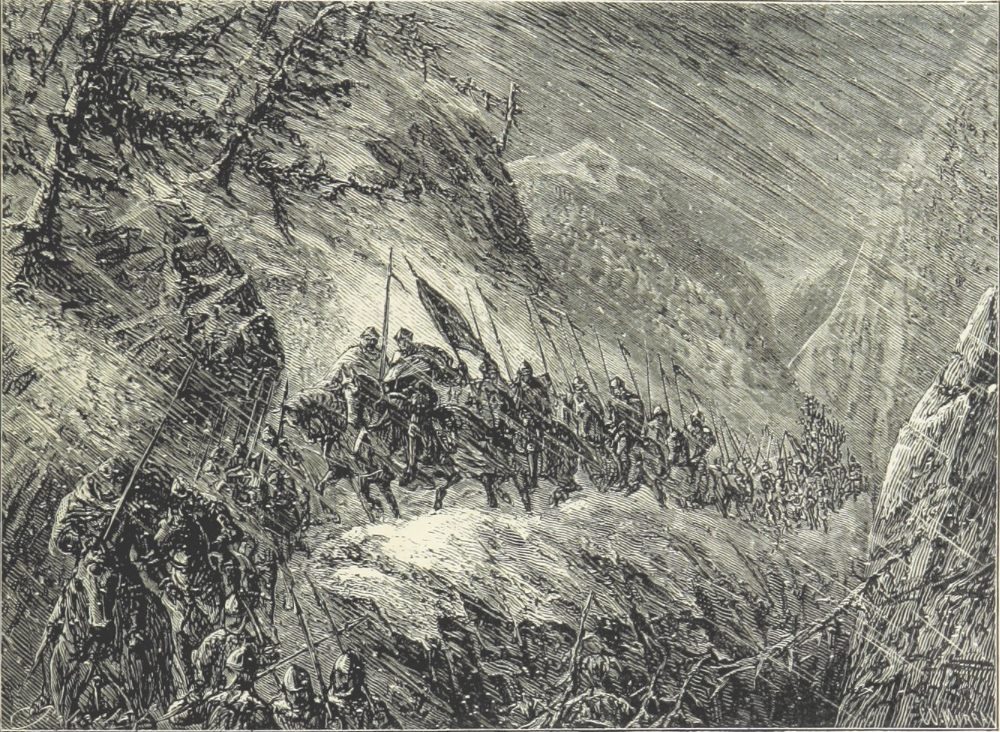
The campaign unfolded along two axes. Sullivan advanced north from Pennsylvania along the Susquehanna River, using boats to sustain his supply line. At the same time, Brigadier General James Clinton moved west from the Mohawk Valley, bringing his brigade down the headwaters of the Susquehanna after engineering a controlled release of water from Otsego Lake to make the river navigable. The two forces joined near Tioga, then advanced as a single column into the Finger Lakes region.
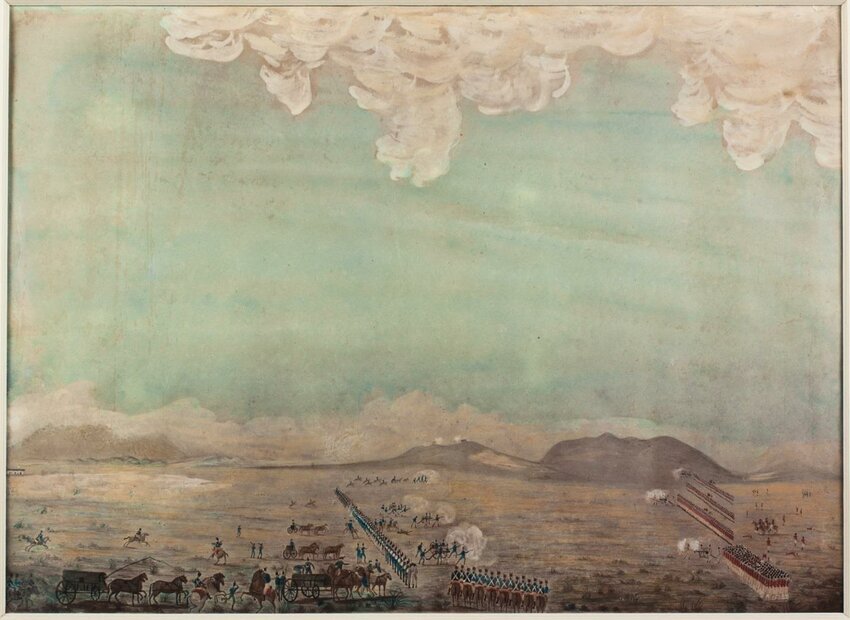
The principal engagement occurred at the Battle of Newtown on August 29, 1779. Newtown was located along the Chemung River, just east of present-day Elmira, New York, at the southern edge of the Finger Lakes region. Today, the battlefield sits only a short distance from the southern approaches to Seneca Lake and the vineyards that now define the region. A combined Loyalist and Iroquois force established a defensive position along a ridge overlooking the river, attempting to block the American advance. Sullivan responded with artillery and a coordinated flanking maneuver that turned the position and forced a withdrawal. The route into the interior was opened.
Newtown was the only major battle of the campaign. Everything that followed was systematic.

American forces moved north and west through Seneca and Cayuga territory, targeting settlements rather than armies. At Kendaia, located along the western shore of Seneca Lake near present-day Romulus and Varick, troops destroyed large stores of corn and multiple longhouse settlements. This area now sits within the Seneca Lake wine region, not far from modern wineries along the western lake road.
At Kanadaseaga, near present-day Geneva at the northern end of Seneca Lake, one of the principal Seneca towns was destroyed. This ground is now at the heart of the northern Seneca Lake wine district, with vineyards and wineries surrounding the area where the town once stood.
Further south along Seneca Lake, the army moved through areas near present-day Hector and Lodi, where additional settlements and agricultural fields were destroyed. Today, these slopes contain some of the most concentrated vineyard plantings in the region.
To the west, at Kanandaigua near modern Canandaigua Lake, additional towns were burned, extending the destruction across the interior. While this area is less dominant in viticulture than Seneca or Cayuga, it remains part of the broader Finger Lakes wine region.
The destruction continued into Cayuga territory. Villages along Cayuga Lake were burned in succession, including areas near present-day Aurora, Union Springs, and Ithaca. These locations now anchor the Cayuga Lake wine trail, with vineyards occupying land that once supported Indigenous agriculture.
Orchards were cut down. Crops ready for harvest were destroyed in place. Stored food was eliminated.
This was the decisive act of the campaign.
By the end of the operation, more than forty towns had been destroyed along with vast quantities of food and infrastructure. The objective was not occupation. It was denial, removing the ability of the Iroquois nations allied with Britain to sustain themselves or continue coordinated resistance.
Militarily, the campaign succeeded.
It did not end frontier conflict entirely, but it broke the region’s capacity for sustained operations and opened the Finger Lakes to postwar settlement. The vineyards that define the region today exist on land that was first cleared through deliberate military action.
Wine Region Profile: The Finger Lakes

Wine Region: Terrain & Soil
The defining feature of the Finger Lakes is the lakes themselves. Carved by glacial retreat, they are long, narrow, and exceptionally deep, running north to south across the region. These lakes function as thermal regulators, moderating both winter cold and summer heat. Seneca Lake, the deepest, exerts the strongest influence and anchors much of the region’s most consistent viticulture. Cayuga Lake, longer and slightly warmer, supports broader varietal diversity. Keuka Lake, with its distinctive Y-shape, creates steep, well-drained slopes that maximize sun exposure.
The soils reflect their glacial origin. A mix of shale, gravel, clay, and limestone fragments provides excellent drainage while retaining enough moisture to sustain vine growth. These conditions force vines into moderate stress, producing wines defined by acidity, structure, and mineral expression. Combined with a cool continental climate and a long growing season, the result is a terroir uniquely suited to precision winemaking at northern latitudes.
Wine Region: Grapes & Wines
Riesling defines the Finger Lakes today. The grape’s ability to retain acidity while developing complex aromatics makes it ideally suited to the region’s climate. The best expressions show clarity, minerality, and balance that rival leading cool-climate regions globally.
Chardonnay and Cabernet Franc have also found a strong foothold, while Pinot Noir continues to develop as growers refine site selection and vineyard practices. Earlier plantings relied heavily on native and hybrid varieties such as Catawba and Isabella, which dominated production throughout the 19th century.
The wines of the Finger Lakes are consistently marked by structure rather than weight. Acidity is the defining feature, supported by clean fruit profiles and a distinct mineral backbone shaped by soil and climate.
Wine Region: Historical Roots
Viticulture in the Finger Lakes emerged in the early 19th century, following the post-Revolutionary settlement of the region. The first recorded vineyard was established in 1829 in Hammondsport, at the southern end of Keuka Lake. From that starting point, grape growing expanded steadily, and by the mid-1800s the region had become a center of American wine production, particularly known for sparkling wines.
The modern identity of the Finger Lakes developed in the mid-20th century. Dr. Konstantin Frank demonstrated that European vinifera grapes could survive the region’s winters and produce high-quality wines. His work transformed the region from one focused on native varieties into a globally recognized cool-climate wine region.
Today, the Finger Lakes stand as one of the most important wine-producing areas in the United States, defined by precision, balance, and a direct connection between landscape and product.
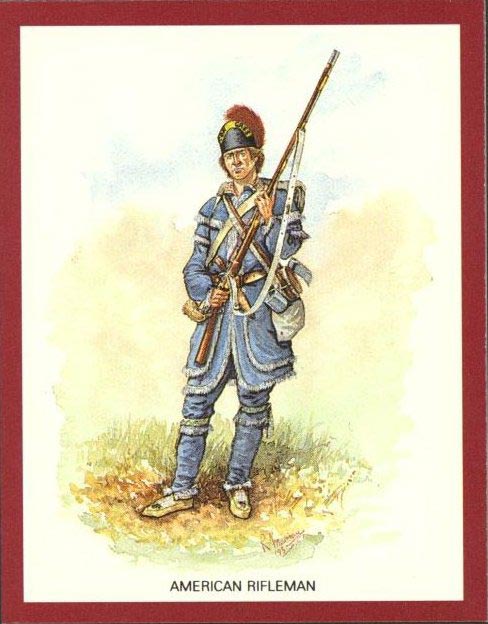
Weapon Spotlight: The American Long Rifle
The fighting across the Finger Lakes during the Sullivan Campaign did not resemble the open-field engagements more commonly associated with the American Revolution. This was a campaign conducted through forests, along ridgelines, and across dispersed settlements. Terrain dictated tactics, and tactics favored a different kind of weapon.
The American long rifle.

Developed in the backcountry of Pennsylvania and the Shenandoah Valley in the early 18th century, the long rifle was the product of German gunsmithing traditions adapted to the American frontier. Its defining feature was the rifled barrel, cut with spiral grooves that imparted spin to the projectile. That spin stabilized the bullet in flight, dramatically increasing accuracy compared to the smoothbore muskets carried by most European armies.
In practical terms, a skilled rifleman could reliably engage targets at distances well beyond 150 yards, and often farther under ideal conditions. By contrast, the effective range of a smoothbore musket was typically under 100 yards, with accuracy falling off significantly beyond that. In wooded terrain like the Finger Lakes, this difference mattered. Riflemen could engage from cover, target officers or key positions, and disrupt movement before opposing forces could close the distance.
The rifle’s construction reflected its purpose. It was longer and more slender than a musket, often with barrels exceeding 40 inches. This increased muzzle velocity and accuracy, while the smaller caliber conserved lead and powder, both critical resources on the frontier. Many rifles were individually crafted, featuring precise rifling, custom stocks, and durable iron or brass fittings.
But the advantages came with clear limitations.
The long rifle was slower to load. The tight-fitting patched ball required more time and care than the loose-fitting musket ball, reducing rate of fire. It also lacked a bayonet, which limited its effectiveness in close combat. In traditional linear warfare, where units advanced and fired in volleys before closing with bayonets, the musket remained the dominant weapon.
The long rifle was not designed for that kind of fighting.
It excelled in skirmishing, reconnaissance, and irregular engagements. During the Sullivan Campaign, where the objective was movement through difficult terrain and the destruction of dispersed targets, the rifle aligned well with operational needs. It allowed American forces to project control across distance and terrain, particularly when facing opponents who were equally skilled at fighting outside conventional formations.
Its influence extended beyond the Revolution.
The emphasis on accuracy and deliberate fire became a recurring theme in American military development. The long rifle foreshadowed the rise of specialized marksmen and, later, the widespread adoption of rifled muskets in the 19th century. It represents a shift away from purely massed firepower toward precision, a concept that would continue to evolve in American warfare.
In the Finger Lakes, the long rifle was more than a weapon. It was a reflection of the environment in which it was used, shaped by terrain, necessity, and a style of warfare that rewarded accuracy over volume.
Final Thought
The Finger Lakes are often understood through their wines. But the landscape itself tells a deeper story.
This was once a center of Indigenous agriculture, deliberately destroyed during the American Revolution and then resettled and reworked into a new agricultural system. The vineyards that define the region today are part of that transformation.


Leave a Reply