PART 1: Military History
A Border Drawn and Redrawn
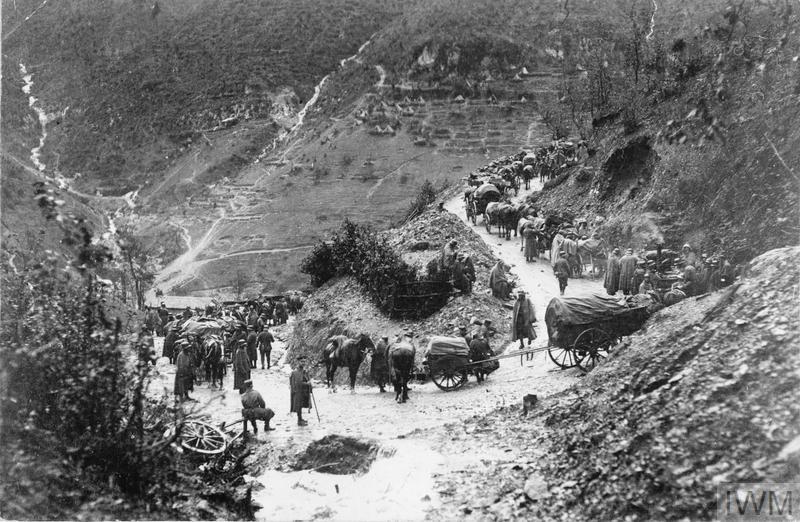
The hills north of the Gulf of Trieste have been a contested seam for as long as anyone has bothered to draw maps of them. The Veneti and Celts lived here before Rome absorbed the region, and after Rome fell, the Ostrogoths, Lombards, and Carolingians each took a turn running the place. By the late Middle Ages the pattern was set: Venice pushed inland from the Adriatic, the Habsburgs pushed south from the Alps, and the valleys in between kept changing hands.
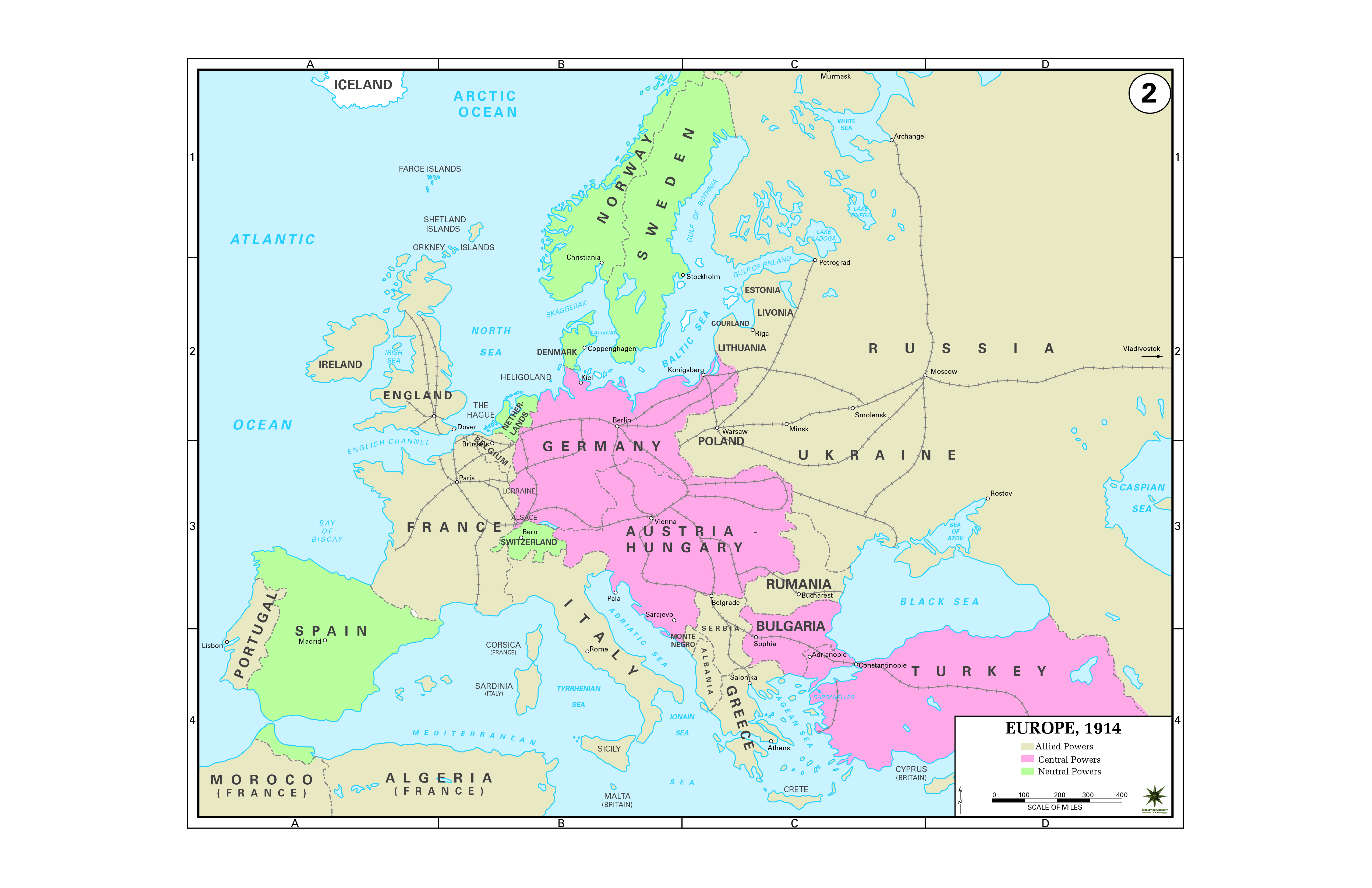
That pattern held all the way into the 19th century. When Italy unified in 1866, Veneto came in, but Trieste, Gorizia, the Isonzo valley, and the Julian Alps stayed Austro-Hungarian. To Italian nationalists these were the terre irredente, the unredeemed lands, and when Italy entered the First World War in May 1915, taking them back was the whole point of going in.
The problem was the ground. Italy’s new eastern front ran along the Isonzo (Soča) River and up into mountains that favored the defender in every conceivable way. Between June 1915 and September 1917, the Italian army under General Luigi Cadorna threw eleven separate offensives at the Austro-Hungarian line along the Isonzo. Eleven. The front barely moved. Then, in October 1917, it moved all at once, and in the wrong direction.
The Twelfth Battle of the Isonzo
By the fall of 1917, Austria-Hungary was close to collapse on its own. Berlin agreed to prop up its ally with a combined force built around the new German 14th Army under General Otto von Below, stiffened with seven German divisions transferred from the Eastern Front after the Russian army fell apart. The plan was not another grinding offensive. It was a surprise breakthrough in the one sector the Italians assumed was too mountainous to attack: the upper Isonzo, around the town of Caporetto (today Kobarid, Slovenia).

The attack opened at 2:00 a.m. on October 24, 1917. German and Austro-Hungarian batteries fired a short, intense bombardment of mixed gas and high-explosive shells, chlorine and phosgene into the valleys, HE onto the ridgelines. The gas sat in the Italian trenches in the cold pre-dawn air and did exactly what it was supposed to do. By the time the infantry moved forward, entire Italian positions had been wiped out or abandoned.
What came next was not the trench warfare either side had spent two and a half years fighting. German stormtroopers, trained in infiltration tactics developed on the Eastern Front and at Riga a month earlier, moved in small groups along the valley floors and the lower slopes. They bypassed Italian strongpoints rather than assaulting them, cut field telephone wires, and kept moving. By the afternoon of the 24th, they were miles behind the Italian forward line.
The Italian Second Army, already exhausted from the earlier Isonzo battles and riddled with command dysfunction, came apart. Whole units surrendered. Others retreated without orders. Cadorna’s rigid, centralized command structure, which had survived eleven offensives, could not process what was happening fast enough to respond. By October 28 the Germans and Austro-Hungarians had taken Udine. By early November the Italians had abandoned the entire Isonzo front and fallen back nearly seventy miles to the Piave River, a few days’ march from Venice.
The cost was staggering. About 40,000 Italian soldiers were killed or wounded, roughly 280,000 were taken prisoner, and an estimated 350,000 more simply walked off, heading home or trying to. British and French divisions rushed in to stabilize what was left. Cadorna was sacked and replaced by General Armando Diaz, who pulled the line together along the Piave and held it. A year later, the same army that collapsed at Caporetto broke the Austro-Hungarians for good at Vittorio Veneto.


German stormtroopers in the captured town of Vittorio, November 1917 (L) and Masses of Italian prisoners held outdoors near Cividale del Friuli, November 1917 (R)
Rommel on Matajur
The name most people recognize from Caporetto belongs to a 25-year-old Oberleutnant nobody had heard of yet. Erwin Rommel was commanding a company of the Württembergisches Gebirgsbataillon, a specialist German mountain unit attached to the 14th Army. The Württembergers were given the steep southern shoulder of the breakthrough zone, the ridgelines running toward Monte Matajur.
Matajur was the key. At 5,384 feet, it looked down on the Friuli plain and anchored the Italian Second Army’s right flank. The Italian high command believed no sizable force could come at it from the east through the Kolovrat ridge and the Krn massif, which is exactly the route Rommel took.
Over 52 hours between October 25 and October 26, Rommel’s detachment (three rifle companies and a machine-gun company, roughly 500 men at the start, often split into much smaller groups) worked its way south along the ridgeline, taking Italian positions by moving behind them rather than at them. According to his own account in Infanterie greift an (1937), Rommel’s force captured 150 officers, 9,000 men, and 81 guns, and took the summit of Matajur on the morning of October 26. His own losses were under fifty. He received the Pour le Mérite for it, Germany’s highest military decoration.
Rommel’s numbers have been picked over for a century and probably overstate his personal share of the bag, since Italian units were surrendering in batches to whoever showed up first. Still, the core story holds: a junior officer with a few hundred men collapsed the flank of an entire Italian army by refusing to fight the war the way both sides had been fighting it for two years. Twenty-three years later he would do a very similar thing in France.

A Quick Note on Two Classification Systems
Italian wine is organized under the Ministry of Agriculture into a tiered system of denominations. DOCG (Denominazione di Origine Controllata e Garantita) is the top tier, with guaranteed quality controls and restrictive production rules. DOC (Denominazione di Origine Controllata) sits just below it, also geographically defined and tightly regulated. IGT (Indicazione Geografica Tipica), added in 1992, allows regional wines more flexibility on grape varieties and methods, which is where most of Italy’s interesting experimental work lives. Italy has over 330 DOC and DOCG zones and more than 100 IGTs.
Slovenia runs a parallel EU system with two main tiers of its own: PTP and ZGP (the protected-designation tiers) and the broader “kakovostno vino ZGP” category that covers quality wine from a named region. For our purposes the useful fact is that Slovenian wine law recognizes three main wine regions: Podravska, Posavska, and Primorska. Primorska is the one that borders Friuli-Venezia Giulia, and it is the only one that matters for Caporetto.


North East Italian wine regions (L) and Slovenia Wine Regions (R)
Collio (Friuli-Venezia Giulia, Italy)
Terrain and Soil
Collio Goriziano sits in the far northeastern corner of Friuli, a ribbon of low hills that runs along the Slovenian border from Gorizia northwest toward Cormòns. The soil is ponca, the local name for a layered, crumbling marl-and-sandstone flysch that holds water in dry summers and drains well in wet ones. The climate splits the difference between Alpine cool air sliding down from the Julian Alps and Adriatic warmth rolling up from the Gulf of Trieste, which is what gives Collio whites their acid backbone and aromatic lift.
Grapes Grown
Whites are the story here. Friulano (the grape formerly labeled Tocai Friulano), Ribolla Gialla, Malvasia Istriana, Pinot Grigio, Sauvignon Blanc, Chardonnay, and Pinot Bianco all do well. Reds are a smaller share of production but include Merlot, Cabernet Franc, Cabernet Sauvignon, and the indigenous Refosco dal Peduncolo Rosso.
Wines Produced
Collio DOC covers the region’s flagship white blends and single-varietal whites. The benchmark style is mineral-driven, structured, and built to age, which is not what most of the world associates with Italian white wine. The region is also one of the centers of the modern orange wine movement, with producers like Josko Gravner (who actually crosses into Slovenia, his estate sits astride the border) and Radikon making extended skin-contact wines that look orange, behave like light reds, and taste like nothing else.
Historical Roots
Viticulture in Collio goes back to the Romans, but the modern identity of the region was built in the 1970s by Mario Schiopetto and a handful of others who walked away from the heavy oxidative style of the Austro-Hungarian era and pushed Friulian white wine toward stainless steel, clean fermentation, and varietal purity. That project put Collio on the international map. The orange wine revival that followed in the 1990s and 2000s was, in a sense, a reaction against the reaction, a return to older methods with modern precision.

Goriška Brda (Primorska, Slovenia)
Terrain and Soil
Cross the border from Collio and you are in Goriška Brda, which is Slovenian for “the Gorizia Hills.” Same flysch marl, same hills, same climate. The border cuts right across the geology. Slovenian wine writers sometimes call Brda “the Slovenian Tuscany,” which is a stretch visually but accurate in the sense that it is rolling, terraced, and almost entirely given over to wine and stone-fruit orchards. Elevations run roughly 300 to 900 feet.
Grapes Grown
Rebula (the Slovenian name for Ribolla Gialla) is the signature grape and the one to pay attention to. Chardonnay, Sauvignon Blanc, Pinot Gris, and Friulano also do well on the white side. Reds include Merlot (historically the most planted red here), Cabernet Sauvignon, and Pinot Noir.
Wines Produced
Brda produces some of the best Rebula in the world, in styles that run from fresh and steely to long-aged skin-contact whites that can sit in acacia barrels for a year or more. The region’s Merlot and Bordeaux-style red blends are consistently strong. Movia, Marjan Simčič, and Edi Simčič are the names to look for if you want to understand the range.
Historical Roots
Viticulture here is Roman in origin and continuous through the medieval Venetian and Habsburg periods. The modern identity of Brda is, in part, a creation of the 1947 Paris Peace Treaty, which drew the border and cut the hills in half. Italian-speaking families on the Slovenian side kept farming, kept making wine, and kept quietly ignoring the line. Since Slovenian independence in 1991 and EU accession in 2004, Brda has become one of the most internationally visible wine regions in Central Europe. If you drive the back roads between Cormòns and Dobrovo, you can cross the border six or seven times without noticing.

Vipava Valley (Primorska, Slovenia)
Terrain and Soil
The Vipava Valley is the next valley south of Brda, running east-west between the Trnovo Plateau to the north and the Nanos and Karst highlands to the south. This is the corridor the German 14th Army’s southern flank used to push into the Friuli plain after the Caporetto breakthrough. The soils are mixed marl, clay, and limestone, and the valley is famous for the burja (bora), a dry, cold northeasterly wind that screams down off the plateau at 60 to 100 mph and dries the vines out fast after rain. The wind is brutal to work in and wonderful for disease pressure.
Grapes Grown
Vipava’s value is in its native whites: Zelen and Pinela, both of which are grown almost nowhere else. Klarnica and Malvasia round out the indigenous whites. International varieties (Chardonnay, Sauvignon Blanc) are also well established. Reds include Merlot, Cabernet Sauvignon, and Barbera.
Wines Produced
Zelen produces a lean, herbal, floral white with pronounced acidity. Pinela is softer, more stone fruit-driven. The valley has become one of the centers of Slovenian natural winemaking, with producers like Batič and Guerila working indigenous varieties in minimal-intervention styles.
Historical Roots
The Romans grew wine in the Vipava; the valley was a main overland trade route between the Adriatic ports and Central Europe for most of its history, which meant its wines traveled. The region was Habsburg territory until 1918, then Italian between the world wars (it sat on the Italian side of the post-Caporetto/post-Versailles border), then Yugoslav, then Slovenian. Each transition shook up the vineyards. The recovery of Zelen and Pinela as commercially serious grapes is a post-1991 story.
PART 3: Weapon Spotlight — The Madsen Light Machine Gun
A Danish Gun on an Italian Front

The weapon I want to flag for this post is the Madsen light machine gun, not because it was the decisive weapon at Caporetto (it was not, the bigger tactical story is the infiltration doctrine and the gas-and-artillery preparation), but because it shows up at Caporetto in a way that foreshadows almost every infantry small arm of the 20th century.
The Madsen was designed in Denmark in the 1890s by Julius Rasmussen, with refinements by Captain Vilhelm Madsen (later the Danish Minister of War, which is how the gun ended up with his name on it) and engineer Theodor Schouboe. It entered Danish service in 1902 and is generally credited as the first mass-produced, shoulder-fired automatic weapon in the world. It was chambered for whatever the buyer wanted, most commonly 8×58mmR, 7.92×57mm Mauser, or 7x57mm.
What made it matter was the weight and the layout. At about 20 pounds loaded, fed by a distinctive curved box magazine mounted on top holding 25 to 40 rounds, firing around 450 rounds per minute, it could be carried by one man and fired from the shoulder, a bipod, or a tripod. Compared to the belt-fed water-cooled guns of 1914, this was a different category of weapon. Nobody else had anything like it when the war started.
At Caporetto, both sides used Madsens. Austria-Hungary had issued them to specialist Musketen-Bataillone, units built specifically around the gun and used as mobile fire-support elements. Germany had purchased Madsens in bulk after the outbreak of war, partly because German industry could not produce light machine guns fast enough to meet demand, and issued them to assault detachments and stormtrooper companies. In the mountains above Kobarid, where a belt-fed Maxim on its sled mount was functionally useless for the kind of fast infiltration work the Germans were doing, the Madsen was the gun that actually traveled.
(I highly recommend watching this YouTube video by user “vbbsmyt” who creates incredibly detailed animations of the workings of many weapons. His video on the Madsen is simply amazing! Link here: https://www.youtube.com/watch?v=LH5tgFEfzaU.)1

Strengths and Limits
The gun’s biggest advantage was that it moved. A two-man team could carry the weapon and a reasonable supply of ammunition across broken ground, over ridgelines, and through the kind of wooded mountain terrain that defined the Isonzo front. The top-mounted magazine kept the profile low when the gunner was prone, an underrated virtue on a hilltop. Reloads were faster than any belt-fed gun could manage.
Against that, the internal mechanism (a long-recoil action originally adapted from a Danish rifle design) was genuinely complicated. Parts counts were higher than on later designs, and poorly trained troops broke the gun. The 25-to-40 round magazine meant frequent reloads under sustained fire. Rate of fire was moderate by late-war standards. The gun was expensive to manufacture, which is why Denmark, a country with limited industrial capacity, ended up making most of them as an export product rather than licensing the design widely.
In the specific tactical situation at Caporetto, the strengths mattered more than the weaknesses. Infiltration tactics do not require a gun that can fire for an hour straight; they require a gun that can come around a bend in a mountain path, put 40 rounds into a surprised Italian section, and keep moving. The Madsen did that.
Legacy
The Madsen outlived its era by a comical margin. Variants stayed in production and in service into the 1950s, and the Brazilian Federal Police reportedly still had them in armories into the 1990s. The top-mounted magazine layout was adopted, refined, and made famous by the British Bren gun of the Second World War, which is a direct stylistic descendant.
More broadly, the Madsen proved a concept: that a single infantryman could carry a weapon with the firepower of a crew-served machine gun. Every assault rifle, every squad automatic weapon, every light machine gun since has been working within the design space the Madsen opened up in 1902.
Where the Wine and the War Touch
Stand on Monte Matajur today and you are looking down on wine country. To the west, the Collio hills run off toward Cormòns in Italy. To the east and south, Goriška Brda and the Vipava Valley spread out across the Slovenian side. The border Rommel crossed in October 1917 did not exist then. The border that exists now was drawn thirty years after he came through.
The vineyards survived. Most of the vines you see on those hills today trace back to rootstock that predates the war, grafted and regrafted through two world wars, two border changes, and the Yugoslav-era collectivization that nearly ended the private-estate tradition in Brda before 1991 brought it back. The wine is a continuity the politics never managed to break.
Future posts will walk specific sites on the battlefield, from the Kobarid Museum up to the Matajur summit, and visit working wineries on both sides of the border. If you are planning a trip, this is one of the most rewarding corners of Europe to walk: the history is right where it happened, and the lunch afterward is very good.
Sources
Books
- Rommel, Erwin. Infanterie greift an. Potsdam: Ludwig Voggenreiter Verlag, 1937. Translated as Infantry Attacks, by Gustave E. Kidde. Washington, D.C.: Infantry Journal, 1944. (Rommel’s own account of his company-level operations in the Romanian and Italian campaigns, including the Matajur action of October 25-26, 1917, with the officer, prisoner, and gun totals he claimed.)
- Robinson, Jancis, Julia Harding, and José Vouillamoz. Wine Grapes: A Complete Guide to 1,368 Vine Varieties, Including Their Origins and Flavours. London: Allen Lane, 2012. (Authoritative reference on grape varieties including Ribolla Gialla/Rebula, Friulano, Zelen, Pinela, and Refosco dal Peduncolo Rosso, with origin and cultivation notes for Friuli and Primorska.)
- Schindler, John R. Isonzo: The Forgotten Sacrifice of the Great War. Westport, CT: Praeger, 2001. (Comprehensive English-language military history of the Isonzo front, 1915-1917, including the eleven Italian offensives and the Twelfth Battle of the Isonzo/Caporetto breakthrough.)
- Thompson, Mark. The White War: Life and Death on the Italian Front, 1915-1919. London: Faber & Faber, 2008. (Narrative history of the Italian front with detailed treatment of Cadorna’s command, the Caporetto collapse, and the Italian strategic situation.)
Websites
- Grillini, Anna. “Caporetto, Battle of.” 1914-1918 Online: International Encyclopedia of the First World War. Last updated April 28, 2015. https://encyclopedia.1914-1918-online.net/article/caporetto-battle-of/ (Peer-reviewed encyclopedia article covering the planning, execution, and consequences of the October 1917 breakthrough, including order of battle and casualty figures.)
- “Madsen Light Machine Gun: A True Centennial Weapon.” The Armory Life. January 30, 2024. https://www.thearmorylife.com/madsen-light-machine-gun/ (Technical overview of the Madsen’s development, mechanism, specifications, and service history from 1902 through the late 20th century.)
- “Vini del Collio.” Consorzio Tutela Vini Collio. https://www.collio.it/ (Official producers’ consortium site for Collio DOC with production rules, grape varieties, and zonal boundaries.)
- “Wines of Slovenia.” I Feel Slovenia (Slovenian Tourist Board). https://www.slovenia.info/en/things-to-do/food-and-wine/wines-of-slovenia (Overview of Slovenian wine regions, including Primorska and its sub-regions of Goriška Brda, Vipava Valley, Kras, and Slovenska Istra, with grape varieties and regional characteristics.)
- “The Battle of Caporetto 1917.” Imperial War Museums Collections. https://www.iwm.org.uk/collections/search?filters[eventString][Battle of Caporetto 1917%2C Italian Front%2C First World War]=on (IWM collections search covering photographs, maps, and documents related to the October 1917 breakthrough.)
Share this post: