PART 1: Military History
The War Comes to Catalonia
The Penedès sits between Barcelona and Tarragona, about thirty miles of rolling vineyard country threaded by the roads and passes that connect Catalonia’s two largest coastal cities. In peacetime, that position made it ideal for growing grapes and moving wine. In 1813, it made the Penedès a corridor that armies could not avoid.
To understand why the fighting reached this particular stretch of wine country, I need to back up to the larger war in eastern Spain. By the start of 1812, Marshal Louis-Gabriel Suchet had become one of Napoleon’s most effective commanders on the peninsula. He captured Valencia on 9 January 1812, extending French control along the entire eastern coast. For more than a year after that, Suchet held his conquests while the war ground on elsewhere.
Then came Vitoria. Wellington’s decisive victory on 21 June 1813 shattered French prospects across northern Spain and changed the strategic picture overnight. Suchet, whose eastern position had been secure enough through 1812, now found himself overextended and increasingly isolated. Under pressure, he evacuated Valencia in July 1813, demolished Tarragona’s fortifications rather than let them fall intact, and pulled his forces back toward Barcelona. What had been a broad French occupation of the eastern coast collapsed into a defensive pocket around a single city.
That retreat is what brought the war directly into the Penedès. The region was not peripheral wine country that happened to get brushed by a passing column. It was the ground between Tarragona and Barcelona, the corridor through which Suchet’s retreating forces, their supply convoys, and their dispatches all had to pass. The roads ran through vineyards, over ridges, and through narrow defiles that gave the terrain real military significance.
The Allied side of the story matters just as much. After General John Murray’s failed siege of Tarragona in early June 1813 (an embarrassment that cost Murray his command), Lord William Bentinck took over Allied operations in the east. As Suchet pulled back, Bentinck advanced cautiously into the ground the French had abandoned. By early September he had moved into the Penedès, occupying Vilafranca del Penedes and pushing an advance guard eastward to the heights at Ordal, a strong position controlling the defile on the road to Barcelona.


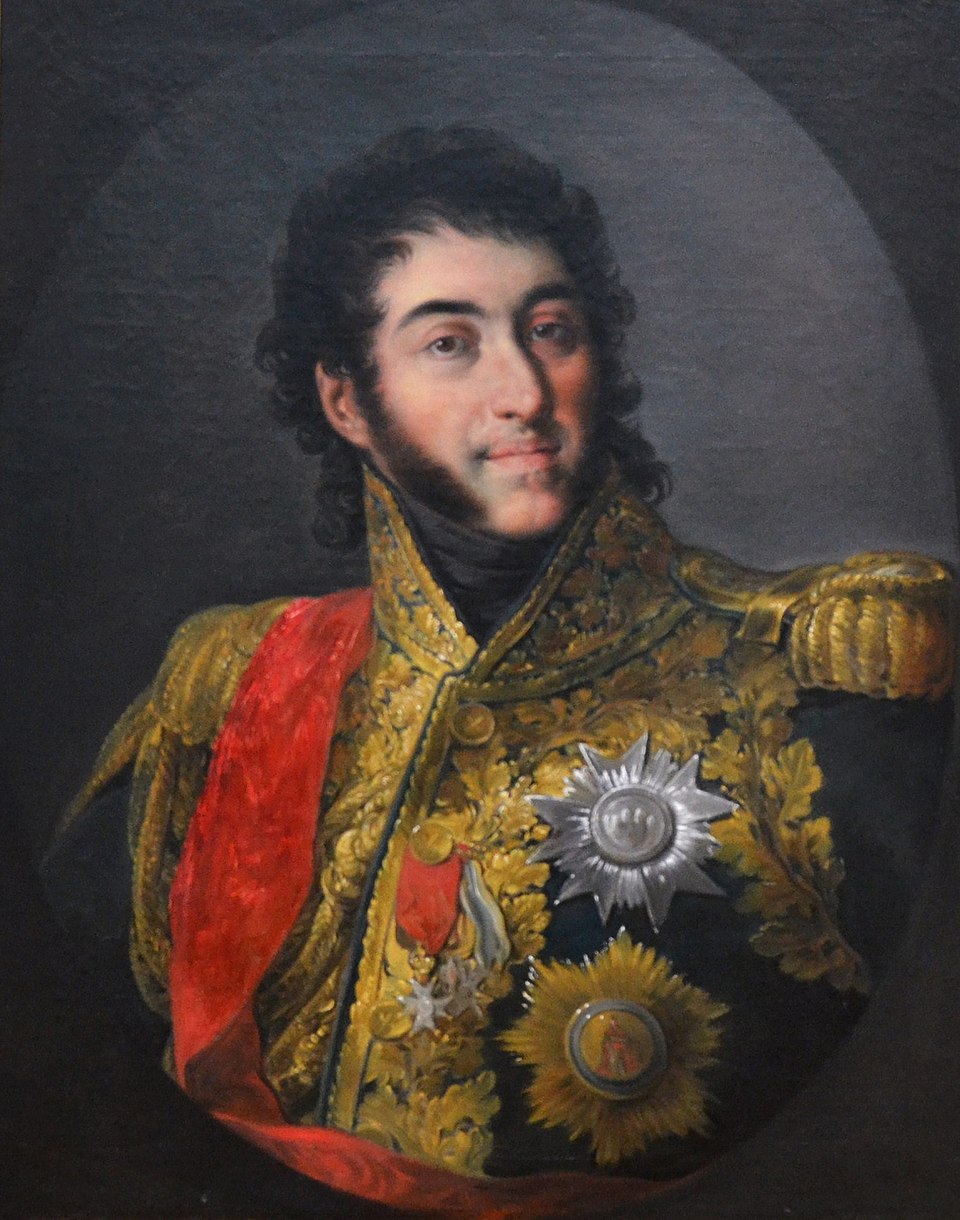
Portrait of Louis Gabriel Suchet in 1813 (L) and Lord William Bentinck (R)
Bentinck made a mistake that advance guards pay for. He believed Suchet was still retreating and underestimated both the size of the French force and Suchet’s willingness to hit back. He left Colonel Frederick Adam with roughly 1,500 men to hold what was, in practice, one of the most important passes in Catalonia, then spread the rest of his force too thin to reinforce quickly.
The Battle of Ordal
The battle that followed is the single action in the Penedès that every account of the region’s wartime history comes back to. It happened on the night of 12 to 13 September 1813.
Adam held the heights at Ordal with his advance guard, reinforced by around 2,300 Spanish troops under Colonel Torres from General Sarsfield’s division. The position was strong on paper: it commanded the defile and the road below. But the Allied defense suffered from inadequate pickets and from Bentinck’s larger error in leaving a screening force to do the work of a full defensive line.
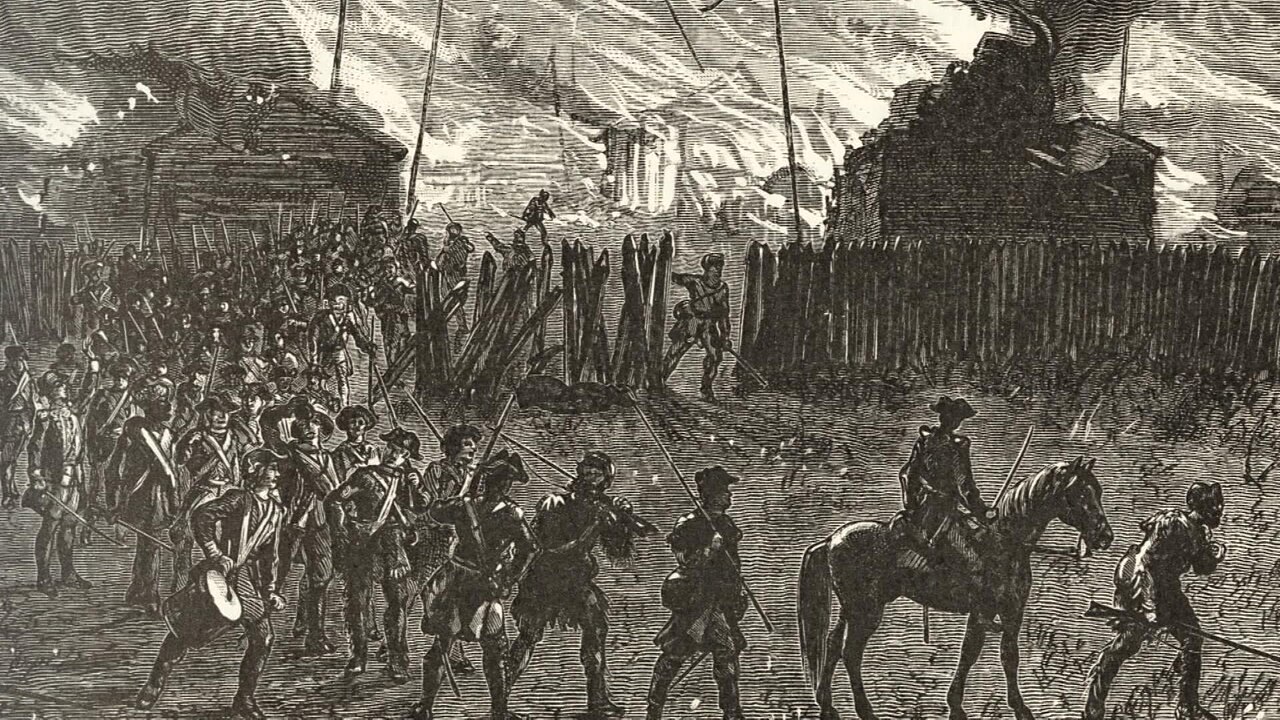
Suchet attacked at night. He concentrated superior numbers against the position, drove in the pickets, and overwhelmed the defenders on the heights. Adam’s men fought hard, but the weight of the French assault carried the position. The next morning, fighting continued around Vilafranca del Penedes as Allied cavalry tried to cover the withdrawal. By the time the action ended, Ordal was a clear French victory.

Several historians describe it as one of the last meaningful French successes on Spanish soil, and that description holds up. By September 1813, the French were being driven out of Spain everywhere else. Suchet’s strike at Ordal was a sharp reminder that he remained dangerous, but it could not reverse the broader collapse. Within months, the French would be back across the Pyrenees for good.
What makes Ordal worth telling in this post is not just that it happened in the Penedès, but that it reveals what the region meant in military terms. The battle was fought over a road, a pass, and the heights that controlled movement through wine country. That is exactly how the Penedès fit the larger Peninsular War. Unlike the Douro campaign at Porto, where the story turns on a city and a river crossing, the Penedès mattered because it was the ground between stronger places, the corridor armies had to cross to get anywhere else.
PART 2: Wine Regions
Spain’s Wine Classification System


Map of Spanish wine regions with legend from: https://vineyards.com/wine-map/spain
Spain organizes its vineyards under a quality system built around Denominacion de Origen Protegida (DOP), the protected designation that governs geographic origin, permitted grape varieties, production standards, and labeling. Within that system, the most common designation is Denominacion de Origen (DO), which covers the great majority of Spain’s recognized wine regions. A small number of elite regions carry the higher-status Denominacion de Origen Calificada (DOCa, or DOQ in Catalonia), a designation that requires a longer track record and stricter oversight. Below the DO level, broader regional wines labeled IGP (Indicacion Geografica Protegida) or Vino de la Tierra allow more flexibility in grape varieties and winemaking while still tying the wine to a defined place.
For this post, the designations that matter most are DO Penedès and DO Cava. Both govern wines produced in the same stretch of Catalan countryside, but they cover very different styles: Penedes for still wines, Cava for traditional-method sparkling. Understanding that overlap is part of understanding the region.
Penedès: The Wine Corridor South of Barcelona

Terrain and Soil
The Penedès stretches across parts of both Barcelona and Tarragona provinces, covering a broad swath of territory that runs from the Mediterranean coast inland toward the pre-coastal ranges. It is not a single flat plain. The region breaks into three broad zones: a lower coastal sector with warmer temperatures and maritime influence, a central depression where much of the commercial viticulture is concentrated, and higher inland sites where cooler conditions and greater elevation produce a different style of wine entirely.
The soils are generally well drained and often calcareous, though the specifics change as you move through the region. Ravines and drainage channels cut through the terrain, creating a patchwork of mesoclimates and exposures. In viticultural terms, that diversity is why the Penedes became such a major center of production: the lower, warmer sectors favor riper, fuller styles, while the upland sites retain acidity and aromatic lift. In military terms, those same ridges and defiles complicated movement, funneled armies into passes, and made positions like Ordal worth fighting over.
Grapes Grown
The classic white backbone of the Penedès comes from three grapes: Xarel-lo, Macabeu, and Parellada. These are the varieties most closely associated with traditional Cava production, and they have been grown here for centuries. Alongside them, the region preserves older indigenous whites like Malvasia de Sitges, Subirat Parent, and Forcada, grapes that connect the modern appellation to a much deeper Mediterranean past.
On the red side, Ull de Llebre (Catalonia’s name for Tempranillo), Garnatxa Negra, Samso (Carinena), Monastrell, and Sumoll anchor the region in Iberian tradition. Later plantings of Cabernet Sauvignon, Merlot, Pinot Noir, Syrah, and Cabernet Franc reflect the international wave that hit Penedès in the late twentieth century, when producers like Miguel Torres helped reshape the region’s reputation abroad.
One grape deserves special mention. Malvasia de Sitges is not the dominant variety of the Penedès, but it is among the most historically resonant. Closely tied to the coastal town of Sitges, it was preserved through centuries of local stewardship, with a particularly important legacy connected to the Hospital Sant Joan Baptista (founded in 1323). In dry form, it produces fragrant, high-acid wines with citrus and stone-fruit character. In sweeter versions, it carries more richness and a deeper sense of place. Malvasia de Sitges matters here not because it dominates the market, but because it preserves one of the oldest and most localized expressions of winemaking in the region.
South of Barcelona, the vineyards widen into one of the most historically important wine zones in northeastern Spain. Here, the Penedès stretches across territory in the provinces of Barcelona and Tarragona, linking coastal and inland landscapes while sitting close to the routes that long connected Barcelona to Tarragona and the wider Mediterranean world. Its position helps explain both its commercial importance and its strategic importance during wartime. The region is also inseparable from the history of Cava, whose origins are closely tied to Sant Sadurní d’Anoia and the surrounding Penedès towns.
Nearer the coast, Alella offers a smaller maritime contrast to Barcelona. Inland, Pla de Bages represents another distinct Catalan wine landscape. But it is the Penedès that emerges as the great winegrowing belt south of the city, both broad in scale and unusually varied in its range of climates, elevations, and soils. That combination has made it one of the defining wine regions of Catalonia for centuries.
Wines Produced
The Penedès produces still whites, roses, and reds under the DO Penedes designation, plus the full range of Cava sparkling wines under DO Cava, whose historic heart lies in Sant Sadurni d’Anoia and the surrounding towns.
The still whites range from fresh, unoaked expressions of Xarel-lo and Parellada to more textured, age-worthy wines that benefit from the region’s range of altitudes. Reds draw on both indigenous and international varieties, producing everything from lighter Mediterranean styles to more structured wines built around Cabernet, Garnatxa, and Ull de Llebre. The denomination also recognizes late-harvest wines, fortified wines, and a specific sweet Malvasia de Sitges category that preserves one of the region’s oldest traditions.
Most readers will meet the Penedès first through Cava, and that makes sense. Cava is Spain’s most famous sparkling wine, and this region is where it was born. But the Penedès is broader than sparkling alone. Its still wines, its indigenous varieties, and its sweet wines all reflect a depth of production that predates the modern appellation system by centuries.
Historical Roots
Viticulture in the Penedès goes back a long time. Archaeological evidence traces vine cultivation in the region to at least the sixth century BC, tied to Phoenician trade networks that brought Mediterranean wine culture to the Iberian coast. The Romans built on that foundation. The Via Augusta, Rome’s principal road down the eastern coast of Iberia, crossed through the Penedès and helped turn it into a corridor for both commerce and agriculture.
That long history matters for this post because it puts the Peninsular War in context. By the time Suchet’s retreating columns and Bentinck’s advancing forces fought over the pass at Ordal in September 1813, the Penedès had been wine country for more than two thousand years. The roads the armies used had carried wine and commerce long before they carried soldiers. War moved through a region that had already been shaped by vines, roads, and exchange for centuries.
PART 3: Weapon Spotlight
The Baker Rifle

If I had to pick one weapon that belongs naturally in the Penedes during the Peninsular War, it would be the Baker rifle.
First adopted by the British Army in 1800 after competitive trials, the Baker was refined into its definitive pattern by 1806. It was not designed to replace the standard-issue Brown Bess musket across the line infantry. It was built for a different kind of soldier: the rifleman, trained to fight in open order, use terrain, and hit specific targets at ranges where a smoothbore musket would be useless.
The Baker was issued to specialist units: the 95th Rifles (the famous Greenjackets), the 5th Battalion of the 60th Regiment, light infantry companies of the King’s German Legion, and Portuguese Cacadores. These were the troops who screened advances, held outposts, and fought in the broken, difficult terrain where conventional linear tactics did not apply.
That makes it a natural fit for the Penedes. The ground around Ordal was not open plains suited to parade-ground volleys. It was ridgelines, defiles, vineyards, and broken visibility. The kind of terrain where light troops who could move independently, find cover, and fire accurately earned their keep. At Ordal in September 1813, Adam’s advance guard included riflemen, which is exactly what you would expect in a position built around holding a pass and watching a road.
Strengths and Limitations
The Baker’s greatest advantage was accuracy. Its rifled barrel imparted spin to the ball and gave a trained rifleman a realistic chance of hitting a specific target at 200 yards, sometimes farther under favorable conditions. That was transformative compared to the smoothbore musket, which was unreliable beyond 50 to 100 yards. The Baker also proved tough enough for sustained campaign service in Spain, where weapons had to endure heat, dust, hard marching, and repeated action without falling apart.
The trade-offs were real. The Baker was significantly slower to load than the Brown Bess because the tight-fitting ball had to be forced down the rifled barrel, often using a mallet on the ramrod. It was more expensive to produce and required more training and more skill from the men who carried it. That is why it remained the weapon of specialist troops rather than the ordinary line infantryman. Precision came at the cost of speed and simplicity, and the British Army accepted that bargain only for soldiers trained to make it count.
Legacy
The Baker was the first British military rifle to see sustained battlefield service, and it remained in use until 1851. Its long career proved something that many military authorities had doubted: that rifles could function as practical weapons of war, not just niche tools for hunters or skirmishers. Later British rifle development, including the percussion-cap Brunswick rifle that eventually replaced it, did not simply copy the Baker. But it built on the lesson the Baker had established, that in the hands of trained troops, accuracy and range justified a distinct tactical role.
For the Penedes, that connection holds. The Baker rifle fits this story because the war here was about passes, watch points, roads, and uncertain contact. Not massed volleys on open ground, but the kind of careful, selective pressure that a trained rifleman with a good weapon could apply from a ridgeline above a vineyard. In a region where one sharp night battle at Ordal crowned months of movement and withdrawal, the Baker is exactly the right weapon to remember.
Conclusion
The Penedes is not the first place most people think of when they think about the Peninsular War. The famous battles, Salamanca, Badajoz, Vitoria, all happened farther west. But the war in eastern Spain mattered, and the Penedes was right in the middle of it: a corridor of vineyards and passes that connected Barcelona and Tarragona and that neither side could ignore.
The Battle of Ordal on the night of 12 to 13 September 1813 gave that corridor a name and a date. Suchet’s night attack, Adam’s defense, the fight for the heights above the road, all of it happened in wine country that had been cultivating vines since the Phoenicians. The Baker rifle, carried by the kind of troops who held positions like Ordal, connects the weapon to the terrain: broken ground, limited visibility, precision over volume.
Today, the Penedes is known for Cava, for Xarel-lo and Parellada, for Malvasia de Sitges and the deep bench of still wines that the region produces alongside its sparkling. The vineyards have been here for over two thousand years. The armies that fought over the pass at Ordal were just passing through.
Sources
Books
- Oman, Charles. A History of the Peninsular War. 7 vols. Oxford: Clarendon Press, 1902-1930. (Vol. VI and VII cover 1813 eastern Spain operations, including Suchet’s withdrawal and the action at Ordal.)
- Napier, William. History of the War in the Peninsula and in the South of France. 6 vols. London: Thomas and William Boone, 1828-1840. (Coverage of the eastern Spanish campaigns and Bentinck’s operations.)
Websites
- “Los combates del Coll de Ordal y Villafranca (12-13 de septiembre de 1813).” El Rincon de Bryon. https://elrincondebyron.com/2025/11/14/los-combates-del-coll-de-ordal-y-villafranca-12-13-de-septiembre-de-1813/ (Abolutely the best online resource available about the area, terrain, and battle.)
- “The Combat of the Ordal Cross: 13th September 1813.” Napoleon Series. https://www.napoleon-series.org/military-info/virtual/c_ordal.html (Detailed account of the battle including Allied and French order of battle, Adam’s defense, and Torres’s Spanish reinforcements.)
- “Siege of Tarragona, 3-12 June 1813.” History of War. https://www.historyofwar.org/articles/siege_tarragona_1813.html (Murray’s failed siege and its consequences for Allied command in the east.)
- DO Penedes official site. https://dopenedes.cat/en/ (Denomination regulations, authorized grape varieties, terrain descriptions, and historical background for the Penedes appellation.)
- “The History of Cava.” DO Cava. https://www.cava.wine/en/regulatory-board/cava-designation-of-origin/cava-history/ (Origins of Cava production in Sant Sadurni d’Anoia and the development of the denomination.)
- “Authorised Grape Varieties.” DO Cava. https://www.cava.wine/en/origin-cava/authorised-grape-varieties/ (Xarel-lo, Macabeu, Parellada, and other permitted varieties for Cava production.)
- “Malvasia de Sitges: How a Wine Became the Best Ally of a Hospital.” Biosphere Sustainable. https://www.biospheresustainable.com/en/blog/123/malvasia-de-sitges-how-a-wine-became-the-best-ally-of-a-hospital (History of Malvasia de Sitges and its connection to the Hospital Sant Joan Baptista, founded 1323.)
- Celler de l’Hospital de Sitges. https://cellerdelhospital.cat/en/ (The hospital winery’s own account of its role in preserving Malvasia de Sitges.)
- Via Augusta Penedes. https://www.viaaugustapenedes.cat/en (The Roman road’s route through the Penedes and its role in the region’s commercial and agricultural history.)
- “The Baker Rifle.” 2nd Bn. 95th Rifles. https://www.95th-rifles.co.uk/equipment/baker-rifle/ (Specifications, adoption history, and field performance of the Baker rifle.)
- “Baker .625 inch flintlock rifle, 1806.” National Army Museum, London. https://collection.nam.ac.uk/detail.php?acc=1992-08-200-1 (Museum catalogue entry for a third-pattern Baker rifle with provenance and technical details.)