When the Hundred Years’ War Crossed the Pyrenees

In April 1367, the Hundred Years’ War spilled into the upper Ebro valley, and the vineyards of Rioja found themselves directly in its path. An Anglo-Gascon army under Edward of Woodstock, the Black Prince (eldest son of Edward III and one of the most feared commanders of the fourteenth century), crossed the mountains not to conquer Spain, but to put a deposed king back on his throne. Their target was Nájera, a modest town on the Najerilla River, tucked into what is today the heart of Rioja Alta.
The fight that followed, the Battle of Nájera (sometimes called the Battle of Navarrete after a nearby village), was one of those moments when a regional civil war gets tangled up in a much bigger one. Castile’s internal bloodletting between two half-brothers collided with the ongoing struggle between England and France, and the shockwaves ran in every direction.
This is a post about that collision, about the hills of Rioja that watched it happen, and about the weapon most associated with the winning side: the English longbow.
PART 1: Military History
The Ground: Rioja in the Fourteenth Century
The hills around Nájera today are stitched with vineyards, and the view from the ridges north of town looks about like it has for centuries: terraced rows of Tempranillo running off toward the Sierra de Cantabria. In 1367 the valley was already wine country. The earliest documentary reference to grape growing in Rioja dates to a donation charter from 873, tied to the Monastery of San Andrés de Trepeana, and by 1063 a settlement charter from Longares was already regulating viticulture in the region . By the time the Black Prince’s army appeared, monasteries along the Camino de Santiago had been tending vines in Rioja for four or five centuries.
Geographically, Rioja sits at a junction. The Ebro River cuts a corridor between the Cantabrian Mountains to the north and the Sistema Ibérico to the south, which makes the valley a natural highway for anyone moving between the northern Meseta and the Mediterranean. Armies have always found it useful, and in the fourteenth century it was a well-trodden route for pilgrims, merchants, and, in this case, an invading army.
The Castilian Civil War


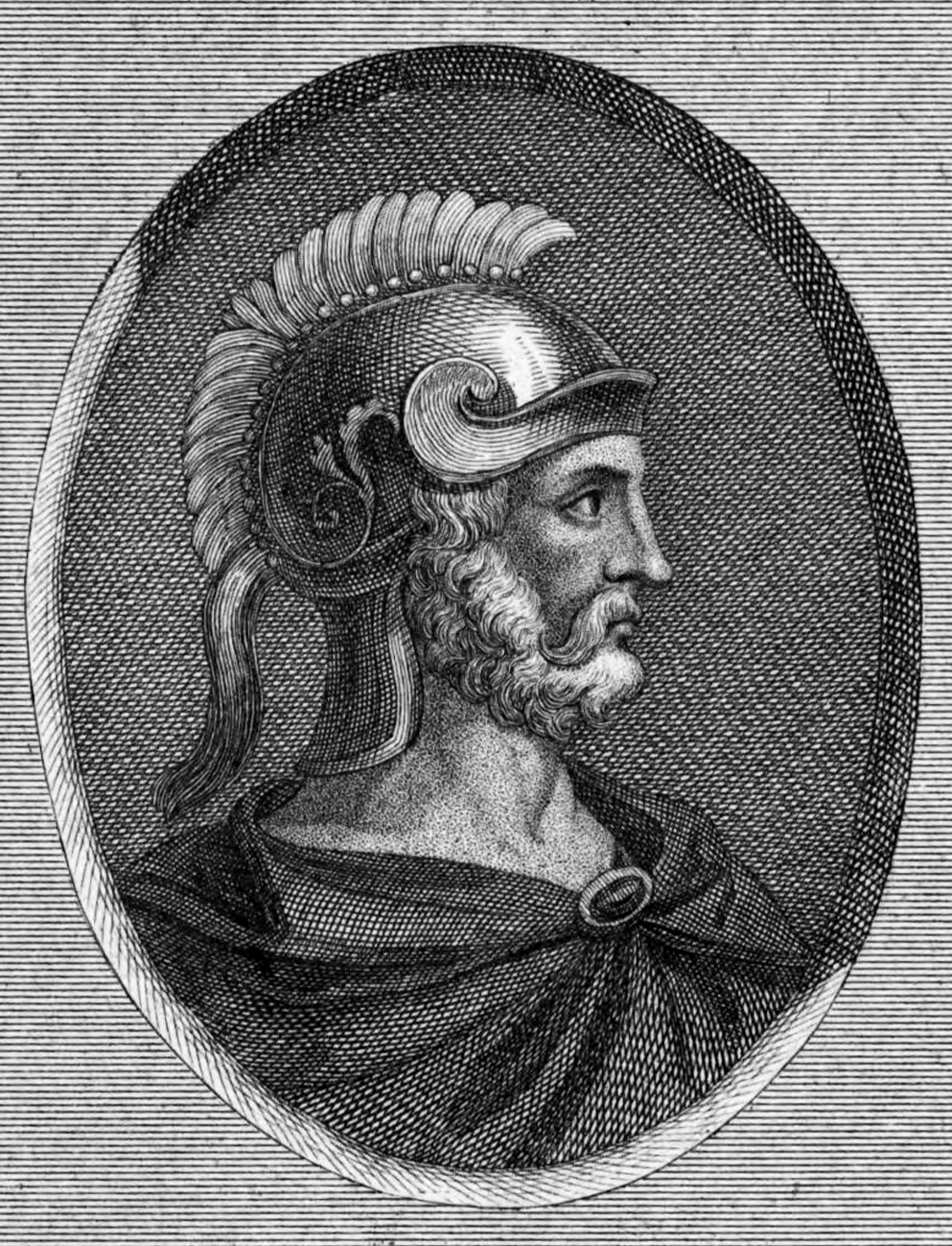
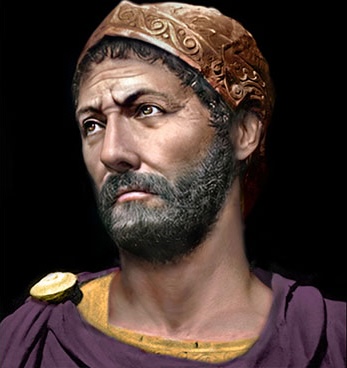
King Pedro I (L) and Henry II (R)
The war that brought the Black Prince to Nájera began as a family quarrel. King Pedro I of Castile, crowned in 1350, governed with a heavy hand, and his reputation depended largely on which side of his sword you happened to be on. To his supporters he was Pedro the Just; to his enemies, Pedro the Cruel. Executions, confiscations, and political reprisals piled up quickly enough to drive a coalition of aristocrats into open opposition.
The man those enemies rallied around was Pedro’s illegitimate half-brother, Henry of Trastámara (count of Trastámara and the eldest son of Alfonso XI’s long-standing mistress, Leonor de Guzmán). What began as noble rebellion turned, over the course of the 1360s, into a full-blown civil war for the Castilian crown.
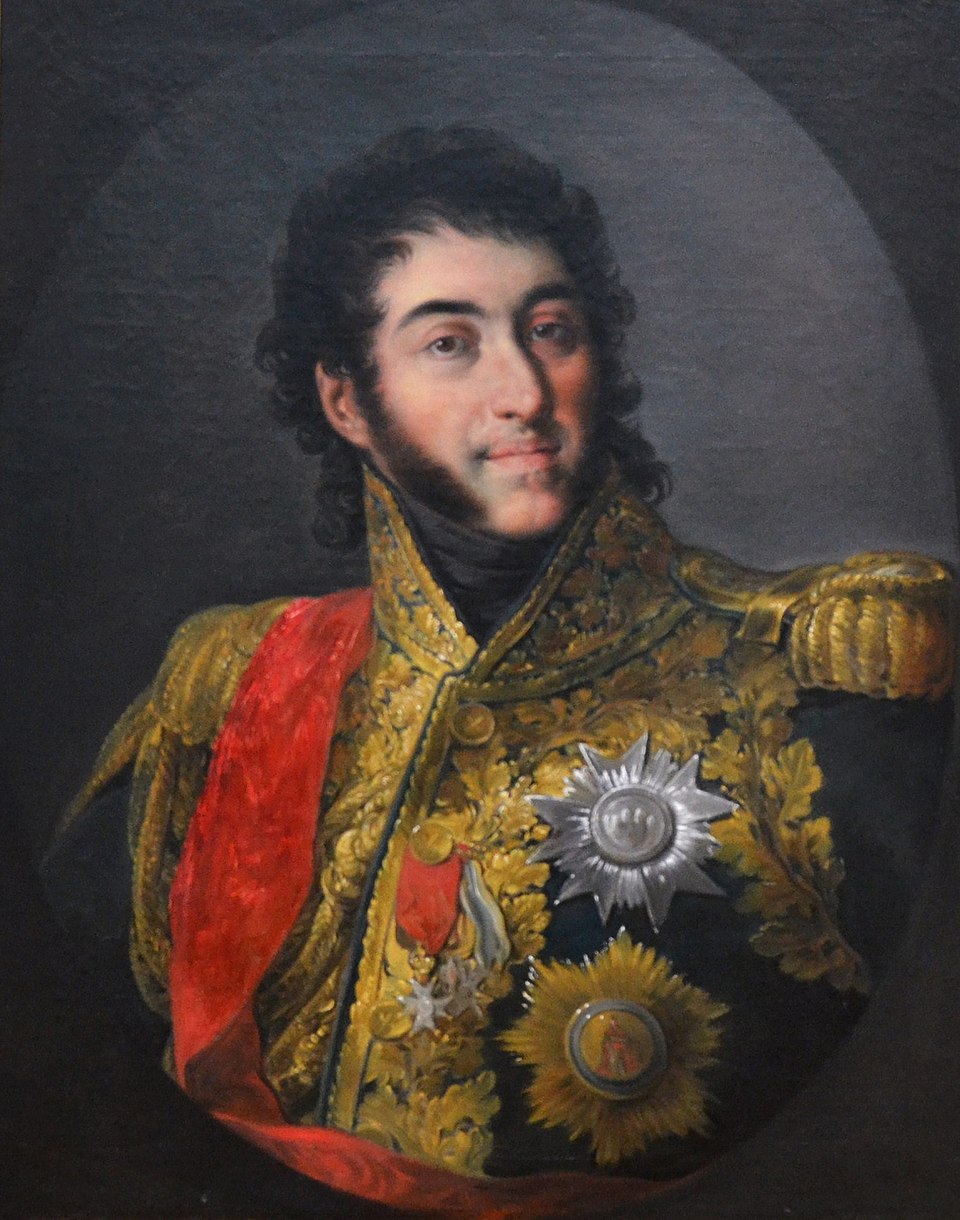
The fight went international almost immediately. Henry secured backing from France, and with it came the Free Companies, mercenary routiers released by the Treaty of Brétigny (1360) who were, at that moment, one of the most destabilizing forces in western Europe. Their nominal commander was Bertrand du Guesclin, a Breton knight whose reputation for hard fighting had already carried him across half of France. Du Guesclin brought the companies south into Spain in 1366, escorted Henry across the Pyrenees, and by the spring of that year Pedro had been pushed off his throne and forced to flee to Gascony for help.
Why the English Showed Up

Pedro’s appeal arrived in Aquitaine at a moment when England and France were taking a breath between rounds of their own war. From the English perspective, the stakes in Castile were not abstract. Castile’s Atlantic fleet, one of the most capable in Europe, could be decisive in any renewed naval fight with France, and a French-backed Trastámara on the throne would almost certainly tip those ships against England.
The Black Prince, who had governed the Principality of Aquitaine since 1362 and was operating with broad authority from his father, agreed to intervene. The Treaty of Libourne (September 1366), signed by Edward, Pedro, and Charles II of Navarre, set the terms: Pedro would pay the costs of the campaign and cede Biscay and Castro Urdiales to England in return for the restoration of his throne (Treaty of Libourne, Wikipedia).
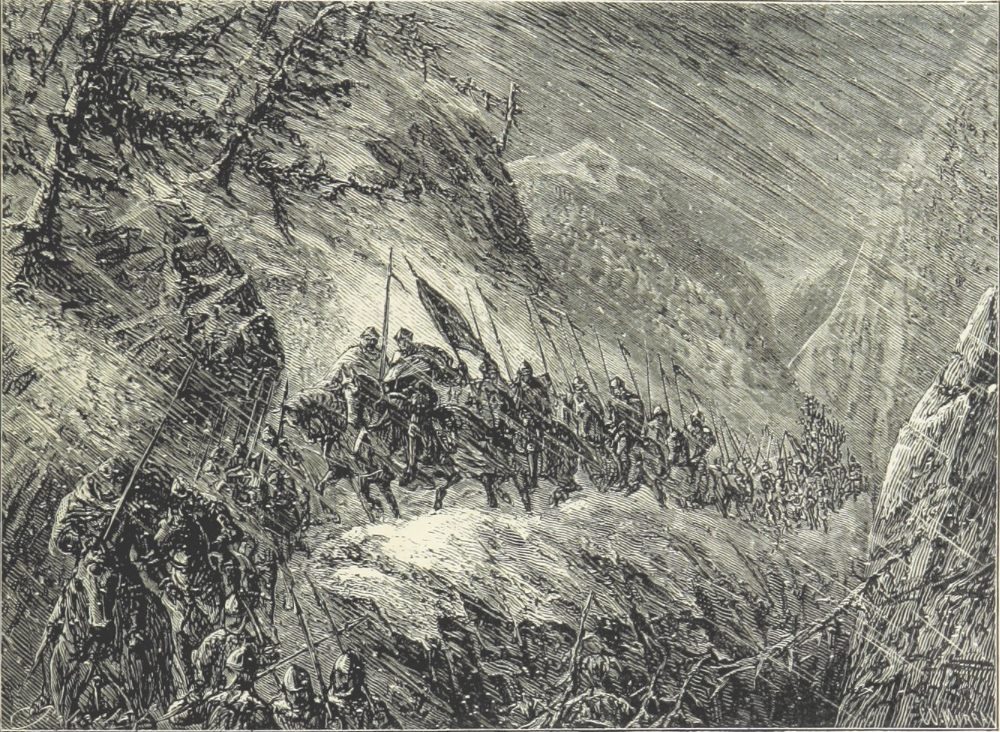
In February 1367 the Anglo-Gascon army, perhaps 10,000 strong and stiffened by a contingent under John of Gaunt, crossed the Roncesvalles Pass in heavy snow. From there they marched south through Pamplona, into the Ebro valley, and on toward Nájera.

The Battle, 3 April 1367
Henry of Trastámara positioned his army on the plain east of Nájera, facing the likely English approach from Navarrete. His force was larger than the Black Prince’s, somewhere in the range of 15,000 to 20,000 men, and included Castilian loyalist nobility, French heavy cavalry under du Guesclin, Aragonese allies, and a substantial body of light cavalry in the form of jinetes, the lightly armored horsemen who were a Castilian specialty.
The Black Prince did not oblige him. On the night of 2 April, the Anglo-Gascon army made a night march around the elevated ground to the north and appeared at dawn on Henry’s northeastern flank, approaching from a direction Henry had not prepared for. Henry had to wheel his army on short notice, and the deployment was ragged before the fighting even started.
When the battle opened, the Black Prince’s archers did what English archers had already done at Crécy (1346) and Poitiers (1356): they shot. Du Guesclin’s French vanguard, heavily armored and dismounted in the English style, absorbed the volleys and pressed into close combat with the English men-at-arms, where the fight was genuinely hard. The wings, however, gave way. Henry’s jinetes were broken up by sustained longbow fire, and the Castilian infantry behind them fractured and ran. Once the flanks collapsed, du Guesclin’s vanguard was surrounded.
The rebel army dissolved. Henry himself escaped the field (reportedly on a swapped horse after his own was killed), but the road back to the Najerilla River became a slaughter. Contemporary chroniclers, including Pedro López de Ayala (who fought at the battle on Henry’s side and was himself captured), put Trastamaran casualties in the thousands. Du Guesclin was taken prisoner on the field, along with Marshal Arnoul d’Audrehem and a long list of French and Castilian nobility.
By nightfall, the crown of Castile was back in Pedro’s hands.
A Brilliant Victory That Unraveled
The trouble started almost immediately. Pedro could not pay what he had promised in the Treaty of Libourne, and the Black Prince, stuck in Castile through the summer with an army bleeding money and losing men to dysentery, finally gave up and marched his force back across the Pyrenees in late 1367. The campaign broke Aquitaine’s finances and, by some accounts, broke the Black Prince’s health as well; he would never fully recover.
Henry, meanwhile, was already rebuilding. Du Guesclin, ransomed within the year, returned to Spain with fresh French support. In March 1369, two years almost to the day after Nájera, Henry cornered Pedro at the Battle of Montiel, lured him into a parley in du Guesclin’s tent, and killed him personally in the ensuing fight. Pedro’s death, on 23 March 1369, ended the war and founded the Trastámara dynasty, which would rule Castile until Ferdinand and Isabella.
Nájera was a tactical masterpiece that changed very little. The Black Prince won the battle and lost the war, and Rioja went back to growing grapes.
PART 2: Wine Regions
Spain’s Wine Classification System


Map of Spanish wine regions with legend from: https://vineyards.com/wine-map/spain
Spain organizes its vineyards under a quality system built around Denominacion de Origen Protegida (DOP), the protected designation that governs geographic origin, permitted grape varieties, production standards, and labeling. Within that system, the most common designation is Denominacion de Origen (DO), which covers the great majority of Spain’s recognized wine regions. A small number of elite regions carry the higher-status Denominacion de Origen Calificada (DOCa, or DOQ in Catalonia), a designation that requires a longer track record and stricter oversight. Below the DO level, broader regional wines labeled IGP (Indicacion Geografica Protegida) or Vino de la Tierra allow more flexibility in grape varieties and winemaking while still tying the wine to a defined place.
Only two Spanish regions currently hold DOCa/DOQ status: Rioja, elevated in 1991, and Priorat, elevated in 2009. Everything else operates at DO or below, which is part of what makes Rioja’s classification genuinely meaningful rather than ceremonial.
Rioja: Spain’s Most Famous Wine Region

Terrain and Soil
Rioja stretches along the upper Ebro valley in northern Spain, covering roughly 66,000 hectares of vineyard across three provinces: La Rioja, Álava (in the Basque Country), and Navarra. The region breaks into three subregions: Rioja Alta (western, higher-elevation, Atlantic-influenced), Rioja Alavesa (on the north bank of the Ebro in Basque country, limestone-heavy), and Rioja Oriental (eastern, warmer, more Mediterranean, renamed from Rioja Baja in 2018).
Nájera sits in Rioja Alta, the cooler, wetter, higher-altitude subregion where most of the region’s structured, long-aging reds come from. Soils here are a mosaic: clay-limestone on the higher terraces, clay-ferrous (iron-rich red clay) on the slopes, and alluvial deposits closer to the Ebro itself. Clay-limestone is the soil type most associated with classic Rioja Alta reds, because it holds moisture through the dry summers and moderates vine vigor.
The climate is Rioja’s other defining feature. The Sierra de Cantabria to the north blocks the worst of the Atlantic weather, while the Ebro valley funnels Mediterranean warmth up from the east. The result is a transitional zone where grapes ripen slowly enough to keep acidity and develop structure, which is why Rioja has always been a red wine region oriented around aging.
Grapes Grown
- Reds: Tempranillo (the dominant variety, planted on roughly 85 percent of red-grape acreage), Garnacha Tinta, Graciano, Mazuelo (known elsewhere as Cariñena or Carignan), and Maturana Tinta.
- Whites: Viura (the same grape as Macabeo), Malvasía Riojana, Garnacha Blanca, Tempranillo Blanco, Maturana Blanca, Turruntés, and small amounts of permitted international varieties such as Chardonnay and Sauvignon Blanc (Rioja DOCa, Wikipedia).
Wines Produced
Rioja’s reputation rests on its red wines and on a classification system built around aging. A Rioja bottle labeled Crianza has been aged a minimum of two years, at least one of those in oak barrel (French or American). Reserva requires three years of aging, at least one in oak and the rest in bottle. Gran Reserva, reserved for exceptional vintages, demands a minimum of five years total, with at least two in oak and two in bottle. In 2018 the Consejo Regulador added a village-level category (Viñedos Singulares) for single-vineyard wines meeting stricter production criteria.
The classic Rioja profile, particularly from Rioja Alta, leans on red fruit, leather, vanilla and coconut from American oak, tobacco, and a savory, sometimes dusty finish. Rioja also produces whites (historically oak-aged and oxidative, though the modern style is often fresher and unoaked), rosados, and a small amount of sparkling wine under the newer Espumosos de Calidad de Rioja category.
Historical Roots
Vine cultivation in Rioja runs at least as far back as Roman occupation, but the continuous documentary record begins with the 873 charter cited above. The region’s medieval wine economy was driven largely by the monasteries of San Millán de la Cogolla and Santa María la Real in Nájera itself, which tended vines and exported wine by the late thirteenth century. Pilgrims on the Camino de Santiago carried Rioja’s reputation back into France and beyond.
The modern era arrived in the nineteenth century in two waves. First, the Marqués de Riscal (1858) and the Marqués de Murrieta (1852) brought Bordeaux techniques (barrel aging, blending, estate bottling) to Rioja, establishing the template for the region’s flagship style. Second, the phylloxera outbreak that devastated French vineyards in the 1860s and 1870s sent French winemakers streaming across the Pyrenees, and many of them settled in Rioja, accelerating the shift to Bordeaux-style production. The region became Spain’s first DO in 1925 and was elevated to DOCa in 1991.
PART 3: Weapon Spotlight
The English Longbow

The weapon that did the most visible work for the Black Prince at Nájera was the English longbow, the same weapon that had already defined English success at Crécy in 1346 and Poitiers in 1356. The longbow was not a uniquely English invention (the Welsh had been using similar bows for generations, and the Vikings and Normans before them had fielded long-stave bows of their own), but by the mid-fourteenth century it had become the backbone of English battlefield tactics, and it would remain so until the gunpowder weapons of the sixteenth century finally displaced it.
A medieval English warbow was typically made from a single stave of yew (imported Mediterranean yew was preferred over English yew because of its denser grain), roughly six feet long, with a D-shaped cross section that combined the heartwood (compression strength) with the sapwood (tension strength). The best direct evidence we have for the weapon’s specifications comes from the Mary Rose, Henry VIII’s warship, which sank off Portsmouth in 1545 and was raised in 1982. The wreck yielded 137 complete longbows and more than 3,500 arrows, and modern analysis of the bows suggests draw weights ranging from about 100 to 185 pounds, with most clustering between 100 and 150 pounds. For context, a modern hunting bow runs about 50 to 70 pounds.
At Nájera, the longbow did what it was designed to do: break up formations before they could close. Froissart’s account (written within a generation of the battle) describes English arrows falling on Henry’s Castilian jinetes thickly enough to unhorse men and scatter the light cavalry advance, which allowed the English and Gascon men-at-arms to press forward into a disordered enemy.
Advantages and Limitations
The longbow’s great advantage was rate of fire. A trained archer could loose roughly 10 to 12 arrows per minute at combat ranges, though the sustained rate in a long engagement was lower, probably in the range of 5 to 6 arrows per minute once fatigue set in on a 150-pound draw. Effective combat range was somewhere between 200 and 250 yards for aimed fire, and massed volleys could reach considerably farther against massed targets.
The weapon’s limitations were structural. Drawing a 150-pound warbow requires years of training and a specific physiological build; skeletons of English archers from the period show deformation of the left arm, shoulder, and spine consistent with a lifetime of drawing heavy bows. You could not simply hand a yew stave to a levied peasant and expect results, which is why the English crown spent centuries mandating archery practice (the Archery Law of 1363, issued by Edward III, required every able-bodied man to practice on Sundays and holy days) to keep the pool of trained archers deep enough to field armies.
The other practical limitation was ammunition. English armies consumed arrows in staggering quantities; campaign accounts from the period record orders for hundreds of thousands of arrows at a time. At Nájera, as at every other English victory of the era, the logistics of supplying arrows was as decisive as the skill of the archers shooting them.
The principal alternative was the crossbow, favored by Genoese mercenaries and most Continental armies. A crossbow had better armor penetration at short range and required far less training, but its rate of fire was slower by a factor of four or five, because the mechanical spanning mechanism (windlass or cranequin) took time to operate. In most engagements where the two weapons met, tempo beat power.

Legacy
The longbow did not evolve into the firearm, but it established a tactical principle that survived the weapon itself: disciplined, massed infantry missile fire, delivered in volleys by trained men holding formation, could break heavier and more expensive opponents. That idea carried into the early gunpowder era and beyond, eventually finding its fullest expression in the musket volleys of early modern warfare.
The weapon outlived its own battlefield effectiveness. English longbowmen still served in the field as late as the sixteenth century (the Mary Rose sank with its archers still aboard), and English militia ordinances required longbow practice into the 1590s, even though by then the matchlock musket had clearly superseded it. The longbow’s decline was less a defeat than a slow obsolescence: the training pipeline collapsed, firearms became cheaper and easier to teach, and the bow passed into ceremony and memory.
Conclusion
The Battle of Nájera is one of those moments where the big forces of European history (Anglo-French rivalry, dynastic politics, mercenary economics) converge on a patch of ground that is, otherwise, known for its wine. The Black Prince won a brilliant tactical victory on 3 April 1367 and lost almost everything that victory was supposed to secure. Pedro died two years later. The Black Prince died in 1376. Du Guesclin, ransomed and returned to French service, became Constable of France and one of the architects of the French recovery that reversed most of England’s Hundred Years’ War gains.
The vineyards, meanwhile, kept producing. The monks of Santa María la Real in Nájera went on tending their vines. The Camino pilgrims kept passing through. Four centuries later, when the Marqués de Riscal brought Bordeaux techniques to the region, Rioja became the Rioja we know now, and the hills above Nájera were ready for it.
The armies moved on. The vines stayed.
Sources
Froissart, Jean. Chroniques. (Primary source; book I includes a detailed account of the Nájera campaign.)
Villalon, L. J. Andrew, and Donald J. Kagay, eds. To Win and Lose a Medieval Battle: Nájera (April 3, 1367), a Pyrrhic Victory for the Black Prince. History of Warfare 115. Leiden and Boston: Brill, 2017.
Ellis-Gorman, Stuart. “Men of Iron: Nájera 1367.”
France, John. Review of To Win and Lose a Medieval Battle: Nájera. De Re Militari.
López de Ayala, Pedro. Crónica del rey don Pedro. (Primary source; Ayala fought at Nájera on Henry’s side and was captured.)