
When the Hundred Years’ War Reached the Vineyards of Rioja

In April 1367, war came to the vineyards of northern Spain.
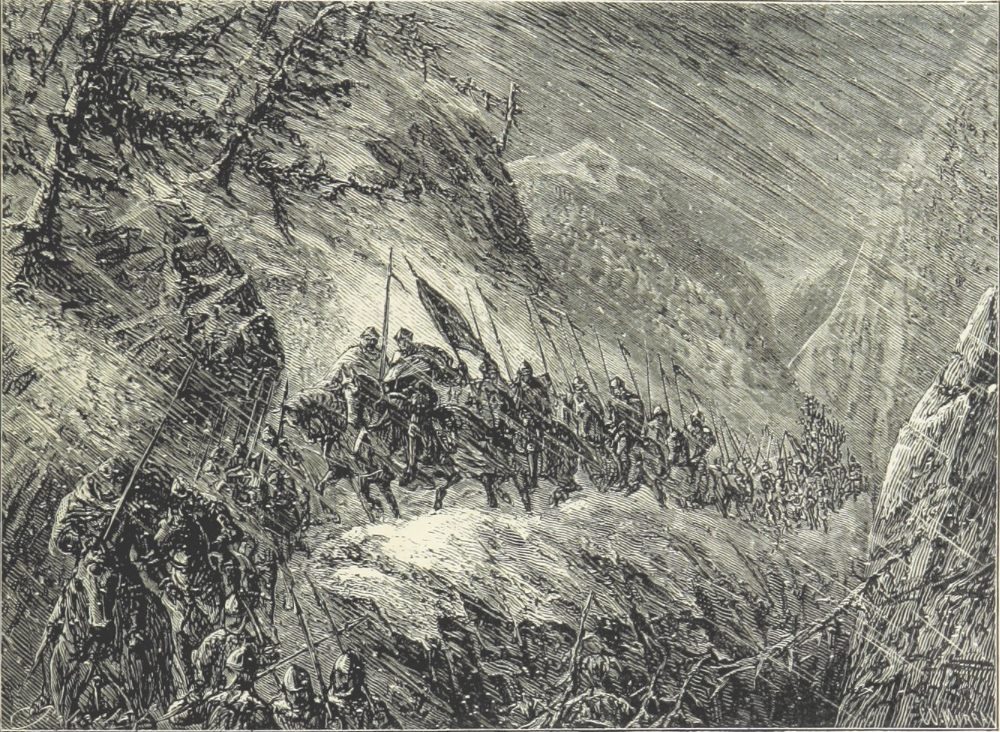
An English-led army crossed into Castile under Edward the Black Prince, one of the most formidable commanders of the fourteenth century. The army marched not to conquer Spain but to restore a king. Their destination was the town of Nájera in the heart of what is now Rioja.
The clash that followed became known as the Battle of Nájera, a dramatic moment when the dynastic struggle inside Castile intersected with the larger strategic rivalry between England and France.
Today the hills around Nájera are lined with vineyards. In the fourteenth century they were already an agricultural landscape shaped by centuries of cultivation. Records show vineyards in the Rioja region by the ninth century, and monasteries along the Camino de Santiago maintained vines throughout the medieval period. By 1367 the valley where the armies fought was already wine country.
Castilian Civil War


The battle was part of the Castilian Civil War, a violent struggle between King Pedro I of Castile and his illegitimate half-brother Henry II of Castile.
Pedro inherited the throne in 1350 and ruled with an intensity that alarmed many of Castile’s powerful nobles. Executions, confiscations, and political reprisals drove a growing coalition of aristocrats into opposition.
Henry of Trastámara became the figure around whom those enemies gathered. What began as rebellion soon developed into a full civil war for the Castilian crown.
The conflict quickly acquired international dimensions. Henry secured French support, including mercenary companies commanded by the celebrated Breton knight Bertrand du Guesclin.
Pedro fled the kingdom and sought help elsewhere.
Why the English Became Involved

Pedro’s appeal reached England at a moment when England and France were already locked in the Hundred Years’ War.
From the English perspective, a French-backed ruler on the Castilian throne posed a strategic threat. Castile possessed naval power and economic resources that could influence the wider war in western Europe.
Pedro’s request therefore aligned with English interests.
The Black Prince, then governing Aquitaine for his father King Edward III, agreed to intervene. In early 1367 he assembled an Anglo-Gascon army and marched south across the Pyrenees.
Their route carried them through the Ebro valley and into Rioja.

The Battle of Nájera
The opposing armies met on 3 April 1367 near the town of Nájera. Some sources refer to the engagement as the Battle of Navarrete, after a nearby village where much of the fighting occurred.
Pedro’s army consisted of Castilian loyalists supported by English and Gascon troops under the Black Prince. Henry’s army included Castilian rebels along with French mercenaries and allied contingents.
The Black Prince approached the battlefield cautiously and maneuvered his army in a way that forced Henry’s forces to reposition. The adjustment unsettled Henry’s deployment before the fighting even began.
When the battle opened, English archers loosed volleys that disrupted the advancing enemy formations. The longbow did not decide the battle alone, but its rapid fire slowed the momentum of Henry’s attack. Once portions of Henry’s line lost cohesion, the Anglo-Gascon army advanced with men-at-arms and supporting infantry.
The rebel army collapsed. Henry fled the battlefield while many of his troops were killed or captured. Among the prisoners was Bertrand du Guesclin himself.
On that day the crown of Castile returned to Pedro.
Victory That Did Not End the War
Despite the dramatic victory, the campaign failed to settle the conflict.
Pedro did not provide the financial rewards promised to his English allies, and the expedition strained the resources of Aquitaine. The Black Prince soon withdrew north across the Pyrenees.
Henry rebuilt his army and returned to Castile.
Two years later the war ended at the Battle of Montiel. Henry captured Pedro after the battle and killed him personally during a confrontation that became one of the most infamous moments in medieval Spanish history.
Henry then took the throne as Henry II and founded the Trastámara dynasty.
In retrospect, the victory at Nájera proved brilliant but temporary.
Spanish Wine Classification


Map of Spanish wine regions with legend from: https://vineyards.com/wine-map/spain
Spain organizes its wines under a nationally regulated Denominación de Origen (DO) system that identifies quality, geographic origin, and production standards. At the base level is Vino de Mesa (table wine), followed by Vino de la Tierra (VT), which indicates a broader regional origin similar to the French vin de pays. Above this are Denominación de Origen (DO) wines, produced in defined regions under strict rules governing grape varieties, yields, and winemaking practices. The highest traditional classification is Denominación de Origen Calificada (DOCa), reserved for regions with a long record of exceptional quality and rigorous regulation; only Rioja and Priorat currently hold this designation. Spain also recognizes Vino de Pago (VP), a category for individual estates whose vineyards and wines demonstrate distinct terroir and meet strict quality standards. Together, these classifications reflect Spain’s emphasis on regional identity, controlled production, and the close relationship between landscape and wine.
Vineyards of Rioja

Region: Rioja (Denominación de Origen Calificada)
Subregions: Rioja Alta, Rioja Alavesa, Rioja Oriental
Rioja stretches along the upper Ebro River valley in northern Spain and represents one of the most historic centers of viticulture in the Iberian Peninsula.
The region sits at a crossroads of Atlantic and Mediterranean climatic influences. Moderate rainfall and relatively mild temperatures create conditions that allow grapes to ripen slowly while retaining balance and acidity.
The vineyards around Nájera lie within Rioja Alta, a zone shaped strongly by Atlantic influence. Cooler conditions and slightly higher rainfall here help produce wines known for structure, elegance, and aging potential.
Soils across Rioja form a mosaic that includes clay-limestone, clay-ferrous, and alluvial deposits. Clay-limestone soils in particular play an important role in regulating vine vigor and retaining moisture during dry summers. River terraces along the Ebro add further variation.
Viticulture in the region dates back more than a millennium. Monastic communities cultivated vines here by the early Middle Ages, and by the fourteenth century vineyards were already a familiar feature of the landscape.
Key grape varieties
Red grapes
- Tempranillo
- Garnacha
- Graciano
- Mazuelo
White grapes
- Viura
- Malvasía
- Garnacha Blanca
Traditional Rioja aging classifications
Crianza
Minimum two years aging including at least one year in oak.
Reserva
Minimum three years aging including at least one year in oak and additional bottle aging.
Gran Reserva
Minimum five years aging including extended oak and bottle maturation.
Rioja wines are widely known for flavors of red fruit, leather, spice, and tobacco that develop through careful aging.
Weapon Spotlight
The English Longbow
The weapon most closely associated with the Black Prince’s army was the English longbow, one of the defining missile weapons of late medieval warfare.
Typically made from yew wood and roughly six feet in length, the longbow required considerable strength to draw. Archaeological evidence from the Tudor warship Mary Rose shows surviving longbows with extremely heavy draw weights, demonstrating the physical demands placed on trained archers.

Advantages
The longbow’s greatest advantage was rate of fire. A trained archer could shoot several arrows per minute, allowing large formations of archers to blanket a battlefield with sustained volleys.
The weapon also offered substantial range. Longbows could send arrows well beyond two hundred meters under favorable conditions, though effective battlefield shooting often occurred at shorter distances.
In open battle this combination of speed and range allowed longbowmen to disrupt enemy formations before close combat began.
Limitations
The longbow required years of training and physical conditioning. It could not simply be handed to inexperienced soldiers and used effectively. Successful longbow armies depended on a culture of archery practice that produced skilled bowmen.
Archers also required large supplies of arrows and open ground from which to shoot effectively.
Comparison with other missile weapons
The principal alternative missile weapon of the era was the crossbow. Crossbows offered greater mechanical power and could deliver impressive penetration against armor. They were also easier to aim and required less lifelong training.
Their disadvantage was speed.
Most crossbows required mechanical spanning devices, which meant their rate of fire was far slower than that of a longbow. In battle the longbow favored volume and tempo, while the crossbow favored power and precision.
Both weapons appeared in medieval warfare and sometimes on opposite sides of the same battlefield.

Influence on later warfare
The longbow did not evolve directly into firearms, but its battlefield success helped demonstrate the value of disciplined infantry missile fire. Later gunpowder weapons would ultimately replace both bows and crossbows, but the tactical principle of massed projectile fire delivered by organized infantry remained.
Summary
The Battle of Nájera reminds us that Europe’s famous wine landscapes have often been shaped by forces far beyond agriculture.
In April 1367 the vineyards of Rioja witnessed a clash of dynasties, foreign armies, and the wider ambitions of England and France.
The soldiers moved on. The vines remained.


Leave a Reply